











Blue Light vs. Privacy: Can One Screen Protector Do Both?
Gazing at a phone on an overcrowded train delivers two different types of headaches: digital eye strain and Thomas from Brooklyn. You want to spare your eyes, but you also have to save your personal data. A high-quality Privacy Screen Protector can be applied and will instantly fix the shoulder-surfing issue, but it also prevents you from losing sleep over whether your information is at risk.
We did the work to make sense of the science behind screen emissions and viewing angles, so you don’t have to. This is what you need to know about bringing both privacy and eye comfort into one seamless device upgrade.
Defining the Privacy Screen Protector
Using a clever engineering technique called micro-louver technology, privacy filters protect your sensitive data.
That’s where micro-louvers (think microscopic vertical window blinds embedded into the screen protector) come in. When your eyes are directly on the phone, the “blinds” are open and you see clearly. But if someone peeks from the side, the blinds keep the light out.
Most high-quality privacy filters block out the display to anyone peering in from a 60-degree viewing angle. This means that your passwords, emails, and photos remain private to you.
The Science of Blue Light
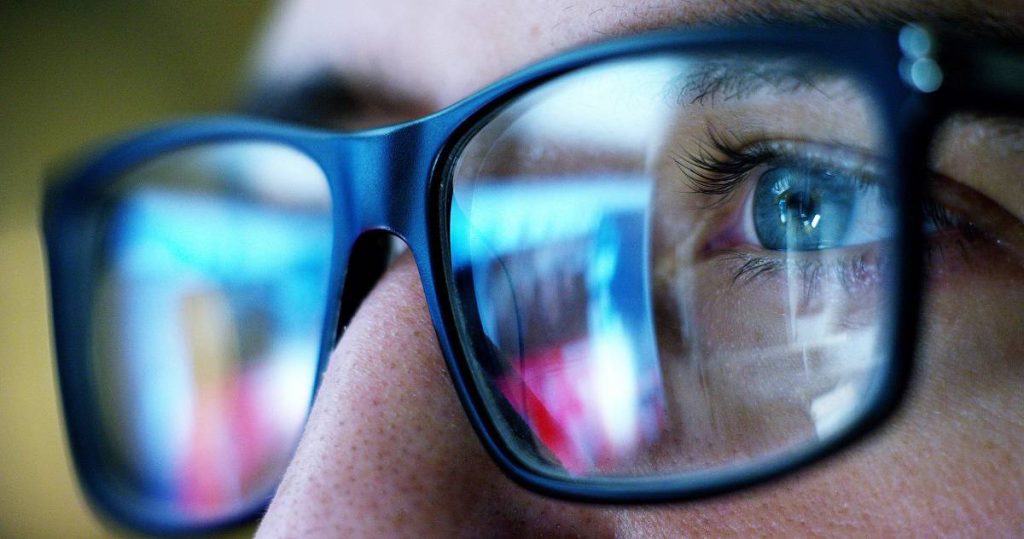
Digital devices also emit visible light, specifically high-energy visible light within the 415–455 nm wavelength range. Natural blue light from the sun helps me stay awake during the day; artificial blue light at night is much more problematic.
Research indicates that excessive exposure to these precise wavelengths interferes with your circadian rhythm. Blue light actually suppresses the sleep hormone melatonin twice as much as green light. A Special blue light filter can limit this exposure to help you reduce eye fatigue and enhance your sleep quality.
Direct Comparison: Blue Light vs. Privacy
If you purchase a stand-alone protector, typically, you are choosing one benefit over the other:
- Blue Light Filters: Most clear blue light shields filter 20% to 30% of harmful blue light. [These eye-care flickers are often ever-so-slightly yellowish to warm up the screen.
- Privacy Filters: Regular privacy films are designed solely to limit viewing angles. It provides virtually no blue-light reduction.
Hybrid Solutions: The Best of Both Worlds
Can you have both? Yes. Now, manufacturers are offering hybrid tempered glass protectors that combine the privacy benefits of micro-louvers with blue-light absorbing dyes.
Then, in a somewhat nutty Whatsontech way of testing these external accessories, hybrid glasses work exceptionally well. They manage to limit side viewing to that critical 60-degree window, and at the same time reduce blue light emissions by up to 30%.”
Performance Breakdown
Compare the data below to see how different screen protectors stack up:
| Feature | Dedicated Blue Light Filter | Dedicated Privacy Film | Hybrid Tempered Glass |
| Blue Light Reduction | 20% – 30% | Minimal / None | 20% – 30% |
| Viewing Angle | 180 degrees (Full) | 60 degrees | 60 degrees |
| Scratch Resistance | Low (if plastic film) | Low (if plastic film) | High (9H Pencil Hardness) |
| Touch Sensitivity | Excellent | Excellent | Excellent |
Practical Application: Installation Tips
The material you choose makes a huge difference in how easy the protector is to apply:
- Static-Cling Film: Common for simple privacy screens. This does not stick well and is very likely to pick up dust or air bubbles.
- Adhesive Tempered Glass: Used for high-quality and hybrid protectors. The adhesive’s inflexible glass and silicone make it far easier to use for an air-bubble-free application.
Debunking the Double-Layer Myth
Few are trying to outsmart the system by putting a blue-light-blocking plastic film underneath a glass privacy protector. Do not do this.
Two screen protectors stacked on top of one another form a thick barrier that greatly diminishes your screen’s touch sensitivity. It also compromises optical clarity, forcing you to turn your screen brightness all the way up, which eats your battery and misses the whole point of reducing eye strain. So always go with a single, hybrid solution.
Upgrade Your Daily Screen Experience
You no longer have to sacrifice one for the other in order to keep your data safe and your eyes comfortable. With a hybrid tempered glass protector, you get tough 9H scratch resistance, consistent 60-degree visual privacy, and decent blue light filtering in a single application.
Examine your daily habits, grab a hybrid protector designed for your specific phone model, and start scrolling safer today.
FAQs
Do privacy screen protectors drain your battery?
Not exactly, but they do mildly reduce your screen’s perceived brightness. You may end up cranking up the brightness on your phone to compensate, which could drain your battery even faster.
What does “9H hardness” actually mean?
It called for the pencil hardness test, not the Mohs mineral scale. The 9H indicates that it will not scratch from the hardest standard drawing pencil (9H). This ensures a really good protection from keys or coins in your pocket.
Does a blue light filter change screen colors?
Yes. To offset punishing blue wavelengths, these filters generally add a slight warm or yellowish tinge to your display. Your eyes can normally adjust to this in a few hours.
Can I remove and reuse a tempered glass protector?
It is highly discouraged. Between that and microscopic dust particles getting into the adhesive area, cleaning it up to put a glass back on is virtually impossible.
Are blue light glasses better than a screen protector?
Both blue light glasses and hybrid screen protectors filter out approximately the same amount of blue light (20% to 30%). It can commonly be a lot easier than glasses as it stays on your phone, and you may forget to take them with you when leaving home.