














Smarter Court Time: Data-Led Coaching and Facility Planning Across Pickleball, Tennis, and Padel
Participation in all three sports is rising fast, and the numbers make the case for sharper planning. In the United States, pickleball reached an estimated 13.6 million participants in the most recent year reported by SFIA, with a separate study indicating 36.5 million Americans played at least once in 2022. Tennis participation in the U.S. sits around 23.6 million players, sustaining gains made since 2020. Globally, padel now counts roughly 25 million players across more than 100 countries, with Spain alone supporting tens of thousands of courts. With players showing up in record volumes, coaches and facility managers can use validated data on dimensions, match flow, and training science to upgrade experiences without sacrificing accessibility.
Practice structures that actually transfer to matches
Random practice produces better long-term retention and transfer than blocked practice across motor learning studies, even when blocked practice looks sharper during the session. In practical terms, replace long, predictable feeding lines with variable sequences and decision-making. Tennis volleys improve when feeds change depth and spin across reps. Padel transitions sharpen when players must decide between taking the ball off the wall or early out of the air. In pickleball, alternating third-shot drops, drives, and lobs from similar starting positions is more representative than 20 straight drops.
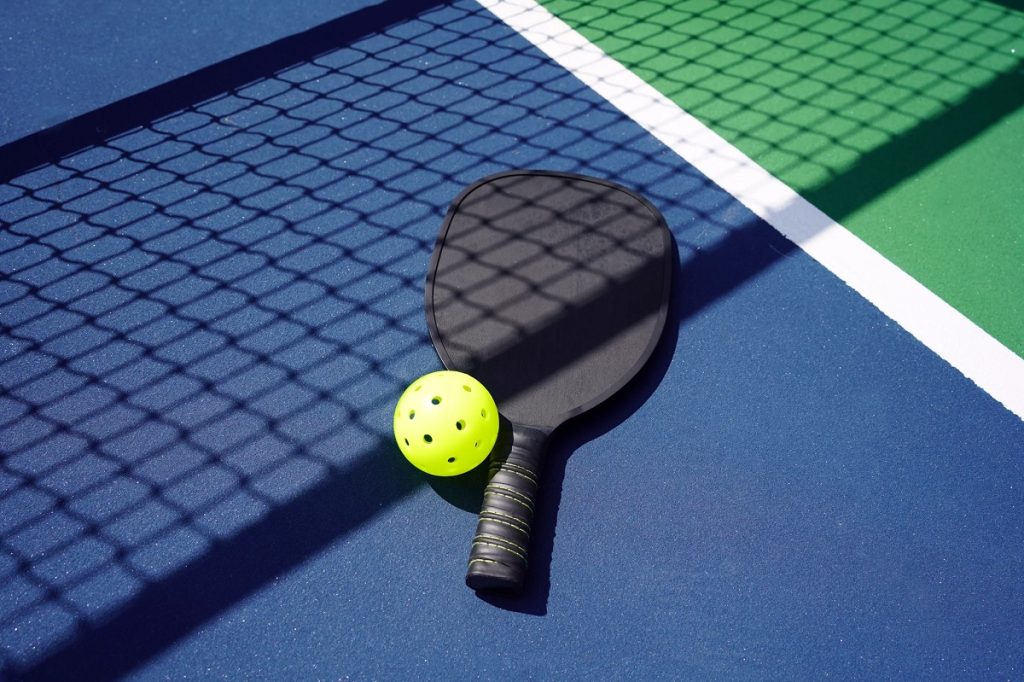
Court geometry should guide your design. A pickleball court is 20 by 44 feet, with a 7-foot non-volley zone on each side of the net and a net height of 34 inches at center. Set constraints that reflect this: start drills from just behind the non-volley line to rehearse realistic footwork into and out of the zone. Tennis serves land in a 21-by-13.5-foot service box; building serve-plus-one patterns that land deep into that space boosts first-strike efficiency. Padel’s 20-by-10-meter enclosure with back glass around 3 meters high (typically rising to 4 meters with fencing) demands trajectory control; teaching topspin lobs that clear 3 meters comfortably is not optional, it is calibrated to the walls players face every point.
Use dimensions to expand capacity without losing quality
A single tennis court can accommodate up to four pickleball courts, a simple spatial reality that can multiply throughput during peak hours. In doubles, that means as many as 16 players active at once where previously two to four played. Padel’s compact 200-square-meter footprint also offers high participation per square meter when scheduled intelligently. Facilities that set time-capped rotations for social play and leave one court for full-match reservations often see smoother flow: the rotation court absorbs new arrivals quickly while reserved slots protect competitive training and leagues.
Marking and setup matter. Permanent or semi-permanent lines reduce transition time between formats, and portable nets at regulation heights minimize setup variability. Tennis nets are 36 inches at the center and 42 inches at the posts; adjust, don’t eyeball. For pickleball, verify 36 inches at the sidelines and 34 inches at center to keep dinking and speed-ups in the intended strike windows. In padel, confirm door safety latches and net tension before every block; small setup errors cascade into preventable injuries and disputed points.
Evidence-based prep for league nights and tournaments
Hydration and recovery are more predictable than many players believe. Position stands from sports medicine bodies recommend an individualized plan anchored by sweat rate, but useful guardrails exist: arrive euhydrated with approximately 5 to 7 milliliters of fluid per kilogram of body mass consumed about four hours pre-match, adjust with another 3 to 5 milliliters per kilogram two hours prior if urine remains dark, and target roughly 0.4 to 0.8 liters per hour during play depending on heat and intensity. Sodium replacement should scale with sweat loss, commonly 300 to 600 milligrams per hour for salty sweaters. These values keep decision-making, reaction time, and fine-motor control more stable across long sessions.
Warm-ups should mirror early match demands. For pickleball, include short exchanges from the non-volley line, then two to three live third-shot patterns so the first real point is not the first time your feet move through the kitchen line. Tennis players benefit from serve-plus-one run-throughs after dynamic mobility; most points end by the fourth shot at club level, so rehearse that sequence before the coin toss. In padel, add wall-specific patterns and overheads early; the glass changes bounce timing, and players who time it in the warm-up conserve energy later.
Cross-sport skill transfer that sticks
Volley quality in tennis improves when players learn the compact preparation and contact stability typical of pickleball hand battles near the non-volley zone. Conversely, pickleball players gain from padel’s wall anticipation cues: reading shoulder line, trajectory, and glass height gives a repeatable decision tree for whether to volley, half-volley, or reset. Coaches can formalize this by tracking a single outcome metric per week, such as successful resets to the opponent’s mid-court in pickleball, first-volley depth beyond the service line in tennis, or wall exits that clear the second line in padel. One metric, consistently measured, outperforms fifteen loosely observed habits.
Smarter booking for stronger communities
Player satisfaction rises when discovery is easy and schedules are predictable. If you manage a facility, publish rotation rules, match-length caps, and court types at least two weeks ahead. If you are a player, simplify your search and commit to consistent play windows. Tools that index multi-sport facilities help both sides; for example, players searching for Pickleball courts near me can quickly fill open slots while clubs increase utilization without overbooking.
Finally, keep a balanced weekly rhythm. Mix one session of high-variability drills that challenge decision-making with one session of match play that locks in pacing and competitive routines. Anchor both to the actual lines and nets of your sport. When training reflects the geometry and timing you face on court, the recent participation boom becomes an advantage, not a scheduling headache, and every hour you spend with a racket starts working harder for your game and your community.