

















What Draws Fight Fans to Katana Swords
People who follow combat sports tend to notice things that casual viewers miss. They watch footwork instead of just punches. They track ring positioning instead of waiting for the knockout. They appreciate the setup as much as the finish.
That same attention to detail is part of why so many fight fans eventually develop an interest in Japanese swords. It is not about fantasizing over weapons. It is about recognizing the same qualities they already value in combat sports: precision, control, efficiency, and a clean execution that makes a difficult thing look simple.
The crossover makes more sense than it seems at first glance. Here is how it usually happens.
Fight Fans Are Drawn to Precision, Not Just Impact
The best fights are not the messiest ones. They are the ones where every movement serves a purpose. A well-timed level change, a perfectly placed jab, a sweep that catches an opponent mid-step: these moments stand out because they show control under pressure.
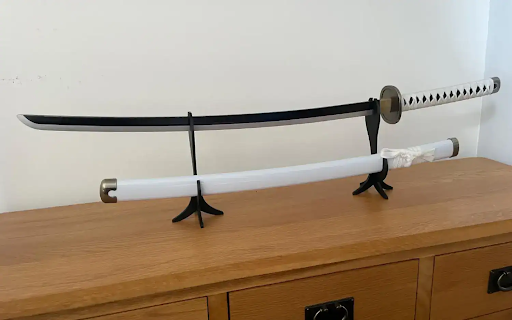
That appreciation for technical quality does not stop at combat sports. It extends to anything that shares the same logic. A katana, when properly made, is an object where every dimension serves a function.
The curve of the blade affects cutting mechanics. The length of the handle determines grip options. The weight distribution controls how the sword moves through a swing.
That is why some fight fans eventually find themselves studying katana for sale descriptions with the same detail-focused eye they bring to breaking down a fighter’s technique. They are not shopping impulsively. They are reading how each element of the design connects to a purpose.
The shift feels natural because the thinking pattern is the same. Watch a fight and you ask: why did that work? Look at a sword and you ask the same question.
Discipline Is Part of the Appeal
The fighters who earn the most respect in combat sports are rarely the wildest ones. They are the ones who stay composed when the pressure rises.
Georges St-Pierre controlled distance so precisely that opponents could not find their rhythm. Anderson Silva waited in the pocket with his hands down, reading reactions before committing. Demetrious Johnson operated with a consistency that made elite opponents look unprepared.
What these fighters share is discipline. Not just physical conditioning, but the ability to choose the right action at the right time and avoid wasting energy on anything else.
The enduring image of discipline and precision behind Japanese blades is part of what leads fight fans to a samurai sword store where they can compare real examples and see how that level of craft translates into a physical object.
A katana does not try to do everything. It is designed for specific types of cuts, held in a specific way, maintained through a specific process. That focus is part of what makes it appealing to people who already understand that mastery comes from narrowing your attention, not broadening it.
Why Blade Culture Feels Familiar to Combat Sports Audiences
Fight fans and sword enthusiasts share more habits than either group might expect.
Both communities pay close attention to equipment details. MMA fans debate glove brands, shin guard thickness, and mouthpiece fit. Sword enthusiasts compare steel types, handle wrapping methods, and guard designs. The conversations sound different, but the underlying behavior is the same: evaluating gear based on performance and build quality rather than appearance alone.
Both groups value economy of motion. A flashy spinning kick that misses earns less respect than a clean straight punch that lands. Similarly, a sword with excessive decoration but poor balance gets less attention from serious collectors than a plain blade with good proportions.
Both communities dig into the reasoning behind technique. Why does a fighter set up a takedown with a jab? Why does a blade have a specific curvature? The people who stick around are the ones who want to understand the logic, not just admire the result.
Media May Spark the Interest, but Craft Keeps It Going
The entry point varies. For some fight fans, it starts with a movie like Kill Bill or the sword sequences in John Wick. For others, it is a video game like Ghost of Tsushima or Sekiro. Some discover it through social media posts from MMA fighters who collect blades on the side.
Regardless of the starting point, the pattern that follows tends to be the same. The initial interest is visual. A sword looks striking, and that is enough to grab attention.
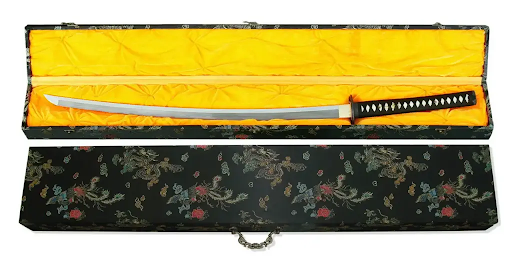
What keeps people engaged is the craft behind the appearance. Learning that the wavy line on a blade (called a hamon) is created by a differential heat treatment process, not painted on. Understanding that the handle wrapping pattern affects both grip and aesthetics.
Noticing that a well-proportioned sword has a visual balance that a poorly made one lacks, even from across the room.
This mirrors the fight fan’s journey from watching highlight reels to studying full camps and corner strategies. The surface pulls you in. The substance keeps you there.
What New Collectors Usually Notice First
People coming from a combat sports background tend to focus on different things than general collectors when they first look at swords.
Blade curvature draws the eye first. Each sword has a slightly different arc, and that difference is not cosmetic. A deeper curve changes how the blade contacts a target during a draw cut. A straighter profile favors thrusting. Recognizing this variation is the first step toward seeing swords as tools with different specializations.
Handle wrapping comes next. The pattern and tension of the cord on the grip is both functional and decorative. Tight, even wrapping provides a secure hold. Loose or uneven wrapping signals careless assembly.
The guard (tsuba) often catches attention for its design variety. Some are minimal iron discs. Others feature detailed scenes cast in bronze or copper alloys.
Scabbard fit is something most people overlook until they see it done well. A properly fitted scabbard holds the blade with just enough friction that it does not rattle, and releases smoothly with a thumb push on the guard.
From Fight Appreciation to Object Appreciation
Many fight fans who develop an interest in Japanese swords are not looking for a weapon. They are looking for an object that reflects values they already hold.
It is the same impulse that leads some people to collect watches, custom tools, or handmade leather goods. The appeal is not about utility. It is about appreciating the work that goes into making something well. Understanding the choices behind the materials, the assembly, and the finishing is satisfying on its own terms.
For fight fans, that satisfaction has an added dimension. The discipline, precision, and economy of design in a well-made blade mirror the same qualities they admire in their favorite fighters. The object resonates because it speaks a language they already understand.
Fight fans who end up interested in katana swords do not arrive there by accident. They arrive because the same eye for precision and measured execution that draws them to a clean performance in the ring also draws them to a blade where every detail has a reason behind it.