

















Why Professional Dungeon Boosting Is Becoming More Popular
The Changing Nature of Modern Online Games
Online games have shifted from static boxed products to live-service ecosystems, prioritizing metrics like daily active users, session length, and ARPU rather than purely narrative or mechanical depth. You’re entering a perpetual funnel where engagement loops, treadmills, and FOMO windows keep you logging in.
Studios A/B test drop rates, difficulty curves, reward cadence, and UI friction. Instead of asking, “Is this dungeon fun?” designers ask, “Does this dungeon extend progression efficiently and convert?” The result: grind-heavy, time-gated content fragmented into bite-sized engagement units. This design incentivizes professional dungeon boosting as a rational, market-driven workaround.
This trend toward streamlined and accelerated progression has created demand for specialized services where players can save time and effort while maintaining a competitive edge. This is where Epiccarry comes in, offering professional dungeon boosts that allow you to reach goals quickly and secure rare rewards without spending dozens of hours on repetitive gameplay. Using such platforms becomes a rational choice for players who value efficiency and want to maximize the return on their in-game time.
Time Constraints and the Busy Gamer Lifestyle
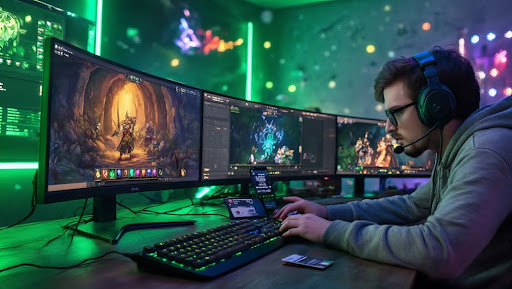
The engagement-first design philosophy collides with the realities of players with careers, families, and limited leisure time. Market data shows rising average player age, shrinking session lengths, and higher weekly log-in volatility.
Players now target maximum value per hour rather than chasing every achievement. Developers gate meaningful progression behind long grinds, creating a real opportunity cost: dungeon runs compete with work, social life, and other commitments.
How Boosting Services Actually Work
Boosting services operate like a gray-market B2C logistics layer for in-game power. You typically choose between:
- Self-play runs: You play alongside high-performing carries.
- Pilot boosts: The service provider logs into your account and plays for you.
Operationally, boosting resembles an on-demand operations pipeline. You pay a fixed price based on dungeon difficulty, market demand, and completion time. Orders are routed through coordinators matching you with contracted players filtered by region, role, and performance.
Most providers bundle value: guaranteed completion, time windows, and optional loot targets. Communication often uses Discord or in-site chat, with timestamped logs and screenshots as proof. Essentially, you’re buying predictable outcomes, not just a dungeon run.
Who’s Using Dungeon Boosting and Why
Busy Casual Players
Full schedules prevent extensive grinding. Boosting is a time–money arbitrage: pay once, skip repetitive content, and stay in pace with friends.
Ambitious Competitive Gamers
Already skilled, they use boosting to accelerate gearing, reach higher keys, or optimize meta builds. It’s less about being carried and more about saving dozens of hours.
Content-Focused Spenders
They value experiences like raids, transmog, and achievements. Boosting turns chores into curated, high-impact play sessions.
Shifting Attitudes Toward Boosting in Gaming Communities
Boosting has long carried a stigma of “paying to cheat,” but community acceptance is growing. Reddit polls, Discord servers, and guild forums show that casual players increasingly see boosting as a pragmatic optimization rather than a moral failure.
Competitive players may still critique boosting for ladder integrity, but casual segments normalize it. Social penalties decrease as adoption grows, reducing exclusion or criticism for using professional dungeon boosting.
Economic Factors Powering the Boosting Market
Economic Accessibility
Boosting shifts endgame access from skill-based mastery to disposable income, reshaping consumer behavior toward transactional shortcuts.
Competitive Advantage
Ladders, cosmetics, and social status drive rational purchases. Boosting aligns with the trend of pay-accelerated progress.
Service Pricing Dynamics
Organized boosters analyze wages, peak seasons, and patch hype to optimize pricing. This establishes boosting as a stable microservice market.
Impact on Game Balance and In-Game Economies
Power Creep and Difficulty
Boosting accelerates power creep, forcing designers to normalize content around overgeared players rather than organic progression. Baseline difficulty becomes incoherent for mid-tier audiences. Ladder performance and group selection skew toward purchased power, eroding long-term engagement.
Inflation and Gold Markets
Paid carries inject currency into closed systems, accelerating gold inflation. Consumables, high-tier crafts, and rare materials track boosted elite income rather than average player earnings. Market distortion grows, wealth concentrates, and baseline effort buys progressively less.
Safety, Security, and Ethical Considerations
Account Safety Best Practices
- Control access: Never share credentials; use trusted providers; disable unnecessary add-ons.
- Harden authentication: Use complex passwords, two-factor authentication, and rotate credentials after sessions.
- Monitor and document: Track alerts, IP changes, and transaction histories; keep screenshots for proof.
Data Protection and Privacy
Boosting creates a shadow data pipeline touching credentials, behavior, payments, and personal identity. Evaluate providers like fintech vendors: encryption, hardware security, database segregation, and granular user consent are critical.
Fair Play and Ethics
- Integrity of Rankings: Boosted accounts distort skill metrics, reducing spectator trust.
- Distorted Economies: Boost-driven inflation compresses gaps between casual and elite players.
- Brand and Governance Risk: Supporting unregulated boosting amplifies pay-to-win concerns, triggers scrutiny, and risks reputational damage.
The Future of Boosting in Online Gaming
Boosting is evolving into a structured service industry shaped by data, automation, and regulation. Expect:
- Tighter platform integration and algorithmic matchmaking.
- Sophisticated fraud-prevention and standardized pricing.
- Escalated developer countermeasures like behavioral analytics and account flagging.
Your strategic choice becomes not simply “boost or not” but which models minimize ban risk, reputational damage, and long-term player churn.
Frequently Asked Questions
Can Dungeon Boosting Help Players With Disabilities Fully Experience Endgame Content?
Yes, it improves access, but it cannot replace adaptive gaming or accessibility features. Boosting buys time and progression, not inclusive design.
How Do Content Creators and Streamers Use Boosting?
Boosting compresses grind time, enabling faster content production, A/B testing, and more frequent monetizable uploads.
Are There Regional Differences in Player Perception?
Yes. Western servers often debate ethics, while some Asian communities view boosting pragmatically, influencing pricing, demand, and long-term monetization.
Can Boosting Influence Developers’ Design or Balance Decisions?
Yes. Developer monitoring of completion rates and economies can lead to balance patches targeting profitable dungeons, bottlenecks, and time-to-reward efficiency.
How Do Parents Feel About Their Children Using Boosting Services?
Concerns include predatory monetization, financial responsibility, deceptive value propositions, and normalization of high-cost, low-skill digital shortcuts.