
















How Digital Media Expands Global Sports Audiences
The role of digital media in expanding sports audiences
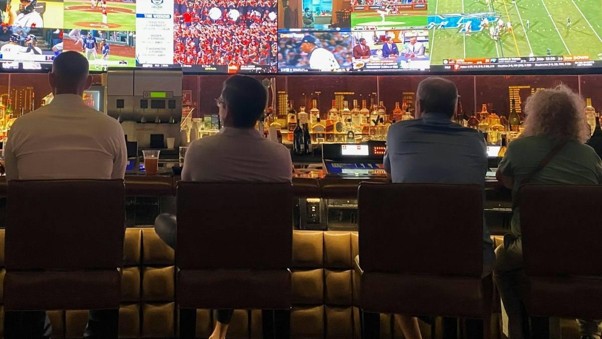
In the age of digital convergence and breaking boundaries in sports and media, location no longer dictates what sports content is available. The constraints of TV broadcasts and the physical restrictions of sports venues no longer apply. Digital platforms make international sports content easier to access, although broadcasting rights, subscriptions and internet availability still determine what viewers can watch. Football events in Spain can now be viewed in real time in Yemen. Traditional fans of sports have now been joined by tech-savvy, digitally engaged, and interactive participants.
The sports and media industry has aggressively courted this newly engaged audience. Viewers can now comment on matches, share highlights and take part in online discussions as events unfold. Interactive participants of all ages and demographics are now engaged sports fans. Sports content is now available via hundreds of digital platforms. Traditional sports content is now available in conjunction with real-time sports events and betting. Leading digital sports and content provider Malbet offers sports content and event broadcasts together with state-of-the-art, secure sports betting content. Thanks to these digitally converged platforms, audience members can now have a personally financially vested interest in each sporting event.
Breaking Boundaries: Mobile Technology and the Modern Fan

Recent years have seen a boom in the number of mobile devices available to the average person. In developing countries, affordable mobile devices have become the main source of televised entertainment for the public. People in countries like Yemen can now have small televisions that fit in their pockets and provide access to all of the worldwide television channels. For businesses in the sports and gambling industries, this means that it is no longer sufficient to provide services only for the audience member that has access to a traditional television. Rather, services must be designed for audience members that can access the services through a mobile device. This requires that services be designed to provide customers with an uninterrupted and real-time experience.
The audience for legal sports and gambling services has changed. Customers expect to be able to engage in all of these services while they are on the move. Traditional sports and gambling services have had to focus on developing mobile applications in order to provide these services to customers. Customers expect to be able to access up to the second odds and betting services, as well as virtual and esports casino services, at all times. In order to achieve this, many customers choose to Download Melbet app on their mobile devices. The apps are designed to provide mobile casino services and to process customer financial transactions.
| Aspect of Fan Engagement | Traditional Media Era | Modern Digital Media Era |
| Primary Viewing Device | Linear Television and analog radios | Smartphones, Tablets, and High-end Computers |
| Audience Interactivity | Passive watching, reading newspaper recaps | Live in-play betting, interactive virtual casino games |
| Content Accessibility | Geographically restricted, premium cable packages | Global digital streaming, viral social media clips |
| Data & Analytics | Basic post-match pundit commentary | Real-time AI generated statistics, trading metrics |
The Explosive Rise of Esports and Computer Games
Physical sports like basketball and football have been able to build and retain large audiences over decades and even centuries. However, the recent growth in audiences for sporting events has been attributed to competitive video gaming. Esports are virtually electronic and thus are easily distributed over the Internet. The viewers are much younger than traditional sporting event viewers.
Esports strategies vary between games and can involve teamwork, rapid decisions and detailed knowledge of game mechanics. Because esports are built on computer software, they can easily be integrated with online casinos and sports books. Users can place wagers on which team achieves the first objective or which player eliminates the next. As with traditional sports, users can view stats in real time and easily benchmark how teams and players are performing. Esports have been able to combine traditional sports and casino gaming with electronic and video gaming.
AI, Gadgets, and the Tech-Driven Fan Experience
While many users think of streaming and betting apps as simple, graphic-rich interfaces, there is far more computational complexity behind the scenes. For example, Artificial Intelligence (AI) determines what content to display on a user’s screen. Based on user behavior, AI may recommend trailers and/or clips of upcoming events or may push real-time odds and promotional offers of online casinos. If a user is located in Yemen but regularly places bets on soccer matches in Europe, AI may promote trailers and/or odds related to those events.
Here are a few examples of AI and other advanced technologies impacting the world of sports and online gambling:
- Personalized Content: Using data science and AI, apps may determine user interests and suggest related content, i.e., suggestions of sports documentaries and/or events.
- Live Odds: Rapid computation of live score and stat data allows bookmakers to automatically adjust odds in real time.
- Virtual Assistants: AI-powered chatbots may be used by casinos to provide around the clock customer support.
- Injury Prediction: Wearable tech may be used by athletes to collect data. When combined with other data and AI, these data may impact global betting lines.
The Convergence of Betting, Trading, and Crypto

Sports finance and trading share several similarities. Financial trading and sports betting both involve analysing uncertain outcomes, but neither activity guarantees consistent profits. The former is obligated to scrutinize hundreds, if not thousands, of securities; the latter must analyze an equally daunting number of sports and esports data points. Given the similarities between financial and sports data, it is no surprise that the digital convergence of sports betting and financial trading has occurred. Differences between betting markets may attract analytical interest, but fees, changing odds and other risks can affect the outcome.
Additionally, the inclusion of cryptocurrencies has improved cross-border transactions and functionally integrated financial systems. The rise of cryptocurrencies has particularly benefited citizens of rapidly developing countries, as it provides a high-speed, low-friction payment and transfer system that circumvents slow and antiquated traditional banking systems.
Cinematic Films and Digital Storytelling
We need to consider the rapid globalization of audiences and the implications of state-of-the-art digital storytelling on diverse audiences. Amazon, Netflix, and other global streaming companies have revolutionized sports documentaries and indulged in expensive sports franchise shows. They have utilized high-end film-making techniques to produce sports shows and films and have applied different techniques to develop characters and thereby engage different audiences.
The shows are successful marketing tools to reach and engage audiences previously uninterested in sports. Typically, a fan goes through the following stages:
- A stylishly produced documentary series on a racing team gets a previously uninterested viewer to develop interest in a new show and engage with a new kind of story.
- A viewer develops a personal connection with a team and is invested in a story that evolves around the team dynamics.
- To fully enjoy the drama and engage with the story, a viewer switches to real-time broadcasts on a smaller screen.
- In order to get a deeper experience of the drama and engage further, a viewer is inclined to place bets on real-time outcomes.
Future Horizons: What’s Next for Digital Audiences?
Technological advances will inevitably revolutionize sports media. When virtual reality headsets become commonplace, people will be able to escape their physical reality and create an extremely realistic digital simulation. Who knows, with enough computing power, people in Yemen may be able to simulate living in London and experience firsthand what it’s like to be a soccer player during a live match.
In order to thrive in today’s economic climate, sports leagues have to find ways to broaden their consumer bases and reap the benefits of increased digital media engagement. With advanced forms of digital integration and the blurring of virtual and physical sports, we may see integrated sports and media conglomerates become monopolies in the future.