









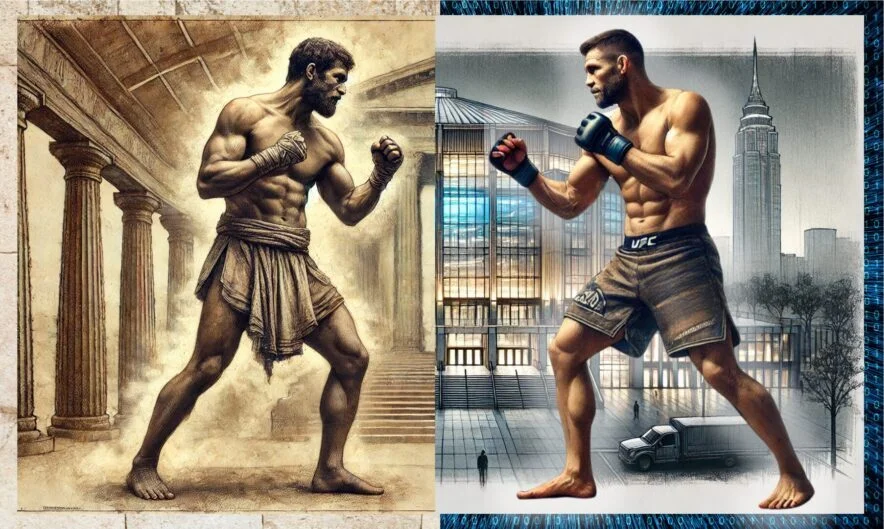
The Evolution of MMA: From Style vs Style to Complete Fighters
Watch an MMA fight today and you’ll see athletes who can trade punches one moment and hunt for a submission on the canvas the next. It looks so natural now that it’s easy to forget the sport began with a very different question.
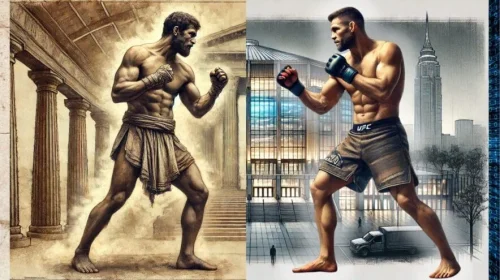
Thirty years ago, nobody knew which martial art would win in a real fight. The answer turned out to be none of them on their own, and it took the sport the best part of two decades to work that out.
The Early UFC: Style vs Style in 1993
The first UFC event took place in Denver in November 1993. The idea was simple enough. Put a boxer in with a sumo wrestler, a karate expert in with a kickboxer, and see who came out on top. There were no weight classes and very few rules, so the whole thing was marketed as something close to a street fight.
For fans of martial arts, it was the debate they’d been having for years finally settled in public. Most people expected the biggest or the hardest hitting man to win. Very few expected the slim Brazilian in a white gi.
How Brazilian Jiu Jitsu Changed MMA Forever
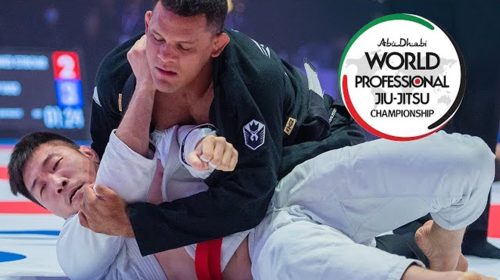
Royce Gracie weighed far less than many of his opponents, yet he won the first UFC tournament without throwing anything resembling a knockout punch. He took fighters to the ground and choked or locked them until they tapped. He went on to win more of those early tournaments, and martial artists around the world were left scratching their heads.
The lesson was brutal for anyone who had only trained to strike. Most fights end up on the floor at some point, and if you don’t know what to do there, size and power count for very little. Almost overnight, gyms everywhere started looking for jiu jitsu instructors.
The Rise of Wrestlers and Ground and Pound
It didn’t take long for the next wave to arrive. Amateur wrestlers, many with strong collegiate backgrounds in the United States, discovered that they could decide where a fight took place. If they wanted it on the ground, it went to the ground.
Rather than chasing submissions, these fighters simply held their opponents down and punched from the top. Mark Coleman became the face of this approach, which fans soon called ground and pound. It exposed a weakness in pure jiu jitsu players too, because being stuck on your back under a heavy wrestler is a miserable place to spend a fight.
Sprawl and Brawl: How Strikers Fought Back
Strikers weren’t finished, though. They realised they didn’t need to become expert grapplers. They just needed enough wrestling to stop the takedown and get back to their feet.
This approach became known as sprawl and brawl, and Chuck Liddell was its best known example. He would defend shot after shot until his opponent tired, then wait for the opening to land something heavy. It proved that striking still had a place in the sport, as long as it was backed up by solid defensive grappling. Each style was now borrowing from the others, and the lines between them were starting to blur.
How the Unified Rules Turned MMA into a Mainstream Sport
The early events attracted plenty of attention, much of it hostile. Politicians criticised the lack of rules, and the UFC was pushed off most television networks in the United States. For a while, it looked as if the sport might not survive.
The turning point came with the adoption of the Unified Rules of Mixed Martial Arts around 2000 and 2001. Weight classes and gloves became standard, and a clear list of fouls kept fighters safer. Under new ownership, the UFC worked hard to win over athletic commissions. The Ultimate Fighter reality series in 2005 then introduced the sport to a huge new audience, and MMA finally began to look like a legitimate professional sport.
The sport’s growing popularity has also encouraged greater interest in analysing upcoming contests, with concepts such as a value betting strategy sometimes discussed in relation to how people assess fight odds and compare them with their own interpretation of a fighter’s chances.
The Complete Fighter: How Modern MMA Training Works
The biggest shift of all is that today’s fighters rarely come from a single martial art. Many of them start training in MMA itself from their teens, learning to blend striking and grappling from the very first session rather than bolting one onto the other later.
Fighters like Jon Jones showed how unpredictable a truly rounded athlete could be, mixing unusual strikes with relentless wrestling. Khabib Nurmagomedov built his success on a grappling base but could still hold his own on the feet. Elite camps now bring in separate coaches for each discipline, alongside specialists in strength and nutrition. These days, the fighter who blends the styles best usually walks away with the belt.
What the Evolution of MMA Means for Beginners
If you’re thinking about stepping into an MMA gym, all of this history works in your favour. You don’t need a black belt in anything to get started. A good gym will teach you striking and grappling side by side, so you develop as a rounded martial artist from day one.
It’s worth trying classes in individual disciplines too, especially Brazilian jiu jitsu or wrestling, because the fundamentals carry straight over into MMA. Plenty of UK gyms offer both, and many run beginner sessions where nobody expects you to know a thing.
The pioneers of 1993 were searching for the one perfect martial art. What they eventually found was that there isn’t one, and the sport has been far better for it.