















Highlight Reels: A Simple Guide for Amateur Fighters and Their Coaches
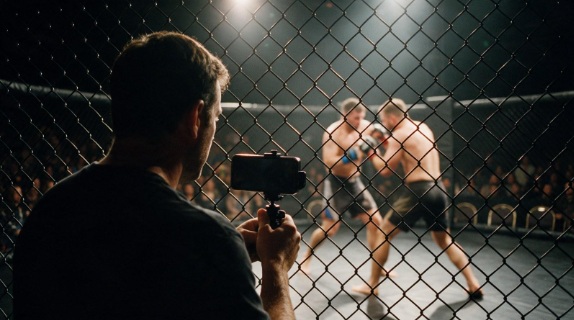
Walk into most gyms on a hard sparring day and you will find a phone propped against a water bottle, recording. Coaches film drills. Cornermen film rounds. Teammates film each other because it is fun to watch back afterward.
Almost none of that footage gets opened twice. That is a shame, because video is the cheapest coaching tool in the building. For an amateur fighter it is also the fastest way to be taken seriously by people who book fights. No matchmaker is going to sit through forty minutes of raw clips from three different phones.
What they will watch is one short video. Putting one together is simpler than it sounds, since browser-based tools can stitch videos together into a single continuous file, so clips from three phones end up in one place. The harder part, and the part worth thinking about, is what belongs in it.

Shoot the whole round, not just the finish
Most gym video is filmed in the worst possible way for this purpose. Someone holds a phone at chest height, drifts with the action, and cuts off everybody’s feet.
Put the phone on something that does not move. A cheap tripod works. So does a folded towel on a chair or a gap in the bag rack. If you can get the camera a little above head height and angle it down slightly, do that.
Frame wide enough to see both people from head to toe. Footwork explains most of what happens in a fight, and you cannot read footwork in a chest-up shot.
Record from the buzzer, not from the moment something exciting starts. The knockdown is rarely the interesting part. The ninety seconds that set it up usually are, and you cannot go back and film those later.
Keep the sound. Corner instructions, the referee, the noise a clean shot makes, the change in someone’s breathing at the end of a round. All of it carries information. A silent clip with a song over the top tells a coach almost nothing.
One more habit worth building: rename the file the day you shoot it. Something like “rivera_round2_spar” will still make sense in six months. “IMG_4471” will not, and a folder of those is how good footage quietly disappears.
What actually belongs in a reel
A highlight reel is not a trophy case. It is a short answer to one question: can this person fight?
Open with a full sequence rather than the loudest moment. A feint, a level change, the finish. That shows someone who is thinking. A spinning kick landing out of nowhere shows one good night, and an experienced matchmaker will read it that way.
Show more than offense. A clean defensive read, a scramble won from underneath, a round taken on grinding pressure. Those say more about how a fighter handles a hard night than a knockout does.
It is worth including one exchange that did not go your way, especially if you recovered well. Coaches notice composure. A reel with no bad moments in it reads as a reel that has been sanded down.
Keep it short. A minute is plenty. Two is generous. If the best thing in it is not in the first thirty seconds, reorder it.
What one study found about watching yourself
Coaches have argued for a long time about how much video review really does. A small study from Western Sydney University, published in the journal Frontiers in Psychology in 2016, took a careful look at the question.
Kylie Steel and Eathan Ellem asked 28 volunteers, university students and staff, all women, with an average age of about 26, to kick a ball at a target 15 meters away. Everyone then completed 70 practice kicks with their weaker foot. Two of the three groups also watched a two-minute edited video of their own best kicks, seven times across the session. Accuracy improved overall: with both feet counted together, kicks landed an average of about 195 centimeters from the center afterward, compared with about 214 centimeters before. But the researchers reported no significant difference between the groups who watched video and the group who only practiced. The video groups improved the most, though not by enough to treat that gap as real.
Something else did separate them. In interviews afterward, the volunteers who had watched themselves were more likely to describe paying attention to how they were moving, rather than only to where the ball ended up. In that study, watching the video did not add measurably to the practice. It seems to have changed what the people doing the repetitions were paying attention to. That is a modest result from one small group doing one simple task, but it matches something most coaches would recognize: film is useful when it makes a fighter watch the right thing.

Cutting it down without losing the story
Order matters more than anything else you will do in the edit. Strongest clip first. Second strongest last. Everything else in between.
Give each clip a little room. Start a second or two before the action and hold a second after it. Clips that snap in and out of the middle of an exchange are hard to follow, even for people who watch fights every week.
Cut at natural breaks. The reset, the separation, the moment the referee steps in. Those are the points where a viewer’s attention is already resetting, so the join does not feel jarring.
Go easy on music and graphics. Name, weight class, record and contact details belong in the message or the file name, not burned across the screen in a font nobody can read on a phone.
Then send one file. Not a folder, not twelve links, not a playlist someone has to work through in order.
Before you send it anywhere
You are not the only person in the video. Your opponent is in it. So are training partners who never agreed to anything.
Promotions generally own the broadcast footage from their own events, so a clip pulled off a stream is not automatically yours to pass around. Footage shot in your own gym is a different matter, though it is still worth asking the people in it.
The simple version: only use material you have the right and permission to use, and if it includes another person, make sure you have the consent you need for whatever you plan to do with it. That applies to anything you upload to an online tool just as much as to anything you post.
Use some judgment about what you show, too. A clip of someone badly hurt does not make the fighter in it look tough. It makes whoever sent it look like they have not thought about it.
A good reel is mostly a series of decisions about what to leave out. Film more than you think you need, keep far less than you want to, and send one clean file that answers the question inside a minute.
The footage is already being shot. Most of it is just sitting on somebody’s phone.