















The Secret Language of Ambigram Tattoos: What Your Flip Design Really Says
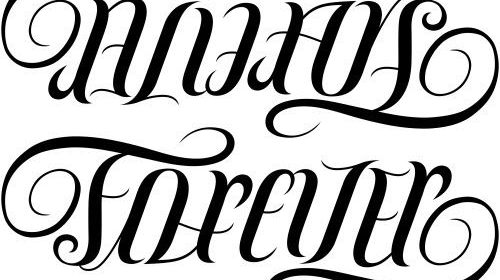
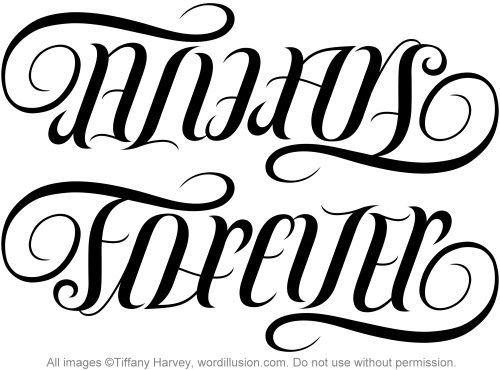
Some tattoos tell you everything at first glance. An ambigram makes you work for it — and that’s exactly the point. You look at it one way, it means one thing. Turn it upside down, spin it around, catch it in a mirror, and suddenly it’s saying something else entirely. That gap between the first read and the second read is where all the meaning lives.
It’s not surprising this style has taken off the way it has. In a world where most tattoos are chosen and inked within days, an ambigram forces you to slow down. You have to actually think about what two ideas you want sitting inside one shape. Before you get anywhere near a tattoo studio, most people spend real time playing with letterforms on an ambigram generator, just to see which word pairs actually hold together visually. That process alone tends to clarify what you’re trying to say — sometimes more than the tattoo itself does.
Why an Ambigram Tattoo Hits Differently
Most tattoo styles are about permanence — locking in one feeling, one memory, one belief. An ambigram does something a little more honest: it admits that most of the things worth tattooing on your body aren’t just one thing. Grief and gratitude live in the same space. Strength and exhaustion often show up together. Love can hold both joy and loss at once.
An ambigram doesn’t force you to pick a side. It lets two truths sit in the same set of letters, waiting for someone to notice.
The Emotional Themes Behind the Most Meaningful Designs
The ambigram tattoos people actually keep loving years later aren’t the ones chosen for the visual trick. They’re the ones built around something real.
Grief and Remembrance
A name that flips into another name is one of the most common requests for a reason — it’s a way of keeping someone present without needing to explain it out loud. Some people go further and design a word like “gone” that rotates into “here,” a small private argument against loss that they carry on their skin.
Mental Health and Duality
A growing number of people are using ambigrams to represent the push and pull of their own mind — “anxious” turning into “calm,” or “broken” flipping into “whole.” Worn this way, the tattoo isn’t a slogan. It’s a reminder that both states are part of the same person, and neither one cancels the other out.
Growth and Transformation
Words like “before” and “after,” or a single name that represents who you used to be, work well here. The physical act of rotating the design mirrors the internal shift — you’re not erasing the old version of yourself, you’re just turning it into something new.
Love That Doesn’t Need Words
Not every meaningful ambigram is heavy. Couples sometimes choose a shared word that reads identically both ways, treating it almost like a private joke or an inside reference only the two of them fully understand. The meaning isn’t in the drama — it’s in the fact that no one else needs to get it.
Turning Your Own Story Into a Flip Design
Here’s the part most people underestimate: having a meaningful idea and having a workable design are two different problems. Not every word pair can be forced into an ambigram. Letter shapes have to genuinely overlap when flipped, and some combinations simply won’t cooperate no matter how good the concept is on paper.
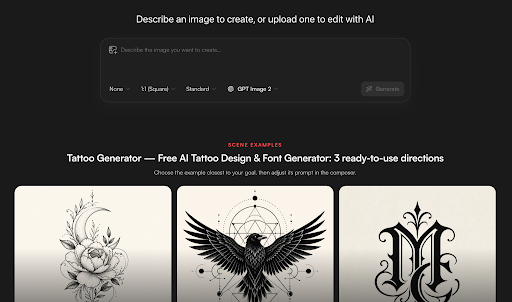
This is where it helps to actually test the idea before getting attached to it. A platform like MyClaw exists specifically for this stage — it lets you type in the words you’re considering and see whether the rotation or mirror effect actually holds up, instead of discovering the problem after you’ve already booked an appointment. Even if you end up handing the final artwork to a tattoo artist for refinement, starting here saves you from falling in love with a concept that letters simply can’t support.
Common Mistakes That Ruin an Otherwise Great Design
A strong idea can still end up as a weak tattoo if a few practical details get skipped.
- Choosing words that are meaningful but visually mismatched. Some pairs sound perfect together but have letter shapes that don’t rotate cleanly. It’s worth testing a few alternate phrasings of the same idea rather than forcing the first one that comes to mind.
- Ignoring how it will look at actual tattoo size. A flip design that’s crisp and legible on a screen can collapse into a smudge once it’s scaled down to fit a wrist or ankle.
- Skipping the “fresh eyes” test. Show the design to someone who has no idea what it’s supposed to say. If they can’t find the second word without help, it likely needs simplifying before it goes anywhere near skin.
- Assuming any tattoo artist can execute it. Rotational lettering is a specific skill. It’s worth asking to see prior ambigram or mirror-script work before committing to someone.
Questions to Ask Before You Commit
Before finalizing anything, it’s worth sitting with a few honest questions: Does this design still feel true if you imagine explaining it in five years? Is the meaning something you’d want people to ask about, or something you’d rather keep private? And does the flip actually work at the size and placement you’re planning — not just in theory, but in a real mock-up you’ve looked at from both angles?
If the answer to all three feels solid, you’re probably looking at a design worth keeping.
Final Thoughts
An ambigram tattoo isn’t really about the trick of the rotation — that’s just the mechanism. What makes it worth the permanence is the fact that it can hold two truths at once without asking you to choose between them. Grief and gratitude, who you were and who you’re becoming, one person’s name resting inside another’s — all of it fits, as long as the letters are willing to cooperate. Take the time to test the idea before you commit to it, and the meaning will hold up a lot longer than the novelty ever would.