
















The History of Roulette in Monte Carlo
Monte Carlo and roulette are so closely linked that it is easy to imagine the game was invented there. It was not.
Roulette was already being played in France long before Monaco built its casino empire. What Monte Carlo did was turn the game into part of a destination. By the late 19th century, roulette was no longer just something played at a table. It had become tied to travel, fashion, money, and the whole image of the Riviera.
That reputation still hangs around the game today.
Monaco Needed the Casino More Than the Casino Needed Monaco
In the 1850s, Monaco was not the luxury playground people picture now.
The principality had lost Menton and Roquebrune, along with a large part of its territory and income. Prince Charles III needed another source of revenue, and gambling became part of the answer. An early casino opened in 1856, but the first attempts were hardly glamorous success stories.
The big change came a few years later.
François Blanc, already experienced in running a successful gaming operation in Bad Homburg, arrived in Monaco in 1863 and took control of the project. That same year, the Société des Bains de Mer was established to run the casino and help build the resort around it.
The familiar Monte Carlo story really starts there.
Roulette Became Part of the Place, Not Just the Casino
Blanc understood that a casino on its own was not enough.
The Hôtel de Paris followed in 1864. The wider resort opened up around the casino, and the railway reached the area in 1868, making Monaco far easier to reach from France and Italy.
That changed who could get there and how often.
By then, roulette had exactly the right image for the place. It was elegant, social, fast enough to create drama, and simple enough for visitors to understand without spending an evening learning complicated rules.
Monte Carlo did not invent roulette, but it gave the game one of its most famous stages.
The Single-Zero Wheel Became Part of the Monte Carlo Identity
This is where roulette history gets a little messier.
François Blanc is often credited with introducing or popularizing single-zero roulette, partly because his earlier casinos in Germany used the format, and Monte Carlo later became strongly associated with it. The basic idea was simple: use one green zero rather than the 0 and 00 found on the American wheel.
That matters because the house edge is lower.
Players looking at live roulette real money tables today can still see that old split in the list by Roulette77: European-style games generally use one zero, while American roulette keeps both 0 and 00.
For Monte Carlo, the single-zero format became part of the attraction. It gave European roulette a cleaner reputation and helped separate it from the double-zero game that developed in the United States.
The Casino Helped Build Monte Carlo Around It
The casino was not dropped into an already famous resort.
The resort grew around the casino.
In 1866, the area previously known as Les Spélugues was renamed Monte-Carlo in honor of Prince Charles III. Hotels, restaurants, gardens, and entertainment venues followed, all feeding into the same idea: visitors would come for more than a gaming room.
That is why the history of roulette in Monte Carlo is really tied to urban history as much as casino history.
A few dates tell the story quickly:
- 1856: Monaco opens its first casino operation
- 1863: François Blanc takes over, and the Casino de Monte-Carlo era begins
- 1864: Hôtel de Paris opens
- 1866: Les Spélugues becomes Monte-Carlo
- 1868: the railway improves access to the resort
Once those pieces were in place, roulette had a permanent audience.
French Roulette Had Its Own Monte Carlo Character
Monte Carlo was also strongly associated with French roulette, which uses the same 37-number wheel but has its own table layout and terminology.
You see bets labeled Rouge, Noir, Pair, Impair, Manque, and Passe. Traditional French tables also use rules such as La Partage or En Prison on certain even-money bets, depending on the exact game.
That gives the format a different rhythm from a compact modern online table.
| Feature | Traditional French roulette | Modern European roulette |
| Wheel | 0–36 | 0–36 |
| Main language | French labels | Usually English/localized |
| Table style | Large, often double-ended | More compact |
| Even-money special rules | Often available | Depends on version |
| Dealer setup | Traditionally multiple staff | Usually 1 dealer |
The wheel is familiar. The presentation is not.
The Blanc Era Left a Much Bigger Mark Than One Game
The Monte-Carlo Société des Bains de Mer archives are useful here because the story quickly gets bigger than roulette itself.
François and Marie Blanc helped shape the entire area around the casino. The Hôtel de Paris, Café de Paris, landscaped surroundings, and entertainment venues all became part of the same destination.
That was the clever part of the model.
A visitor could gamble, dine, stay overnight, attend a performance, and spend days in the resort without the casino having to carry the entire experience by itself.
Roulette benefited from that setup because it became one piece of a much larger social ritual.
Monte Carlo Survived Because It Kept Changing
The casino went through expansions, architectural changes, wars, changing travel habits, and completely different generations of players.
Roulette stayed.
What changed was everything around it.
By the early 20th century, Monte Carlo had become shorthand for glamorous gambling. Later, film, fiction, and celebrity culture pushed that image even further. The casino stopped being merely a place where roulette was played and became a symbol people recognized even if they had never visited Monaco.
That is hard to separate from the game’s modern identity.
Roulette Still Connects the Old Monte Carlo to the New One
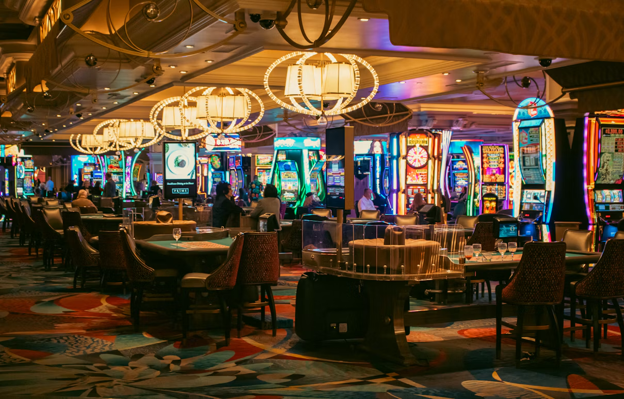
Walk into Monte Carlo now, and you will find far more than the old image of tuxedos around one green table.
There are modern slots, electronic games, different table formats, and a much broader entertainment business around the historic casino district.
Roulette is still there.
That continuity is probably the most interesting part of the story. The game survived because Monte Carlo never treated it like a museum piece. It stayed part of the working casino floor while the resort around it kept moving forward.
Roulette was already old when Monte Carlo adopted it.
Monte Carlo is what helped make it legendary.