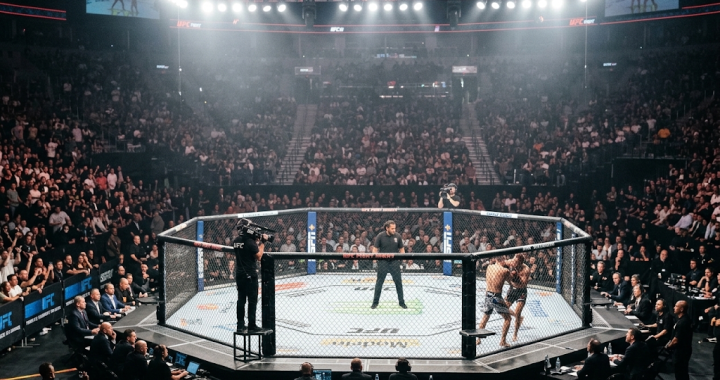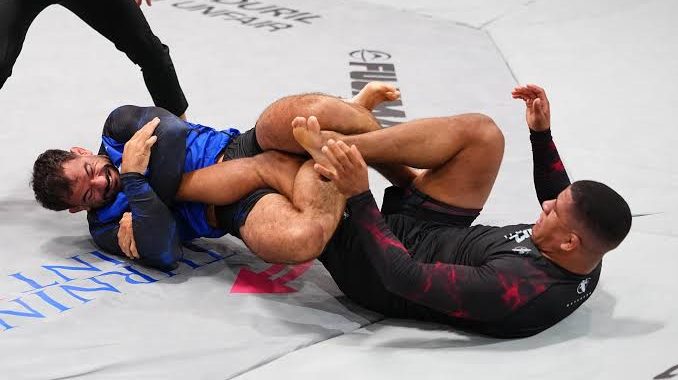
















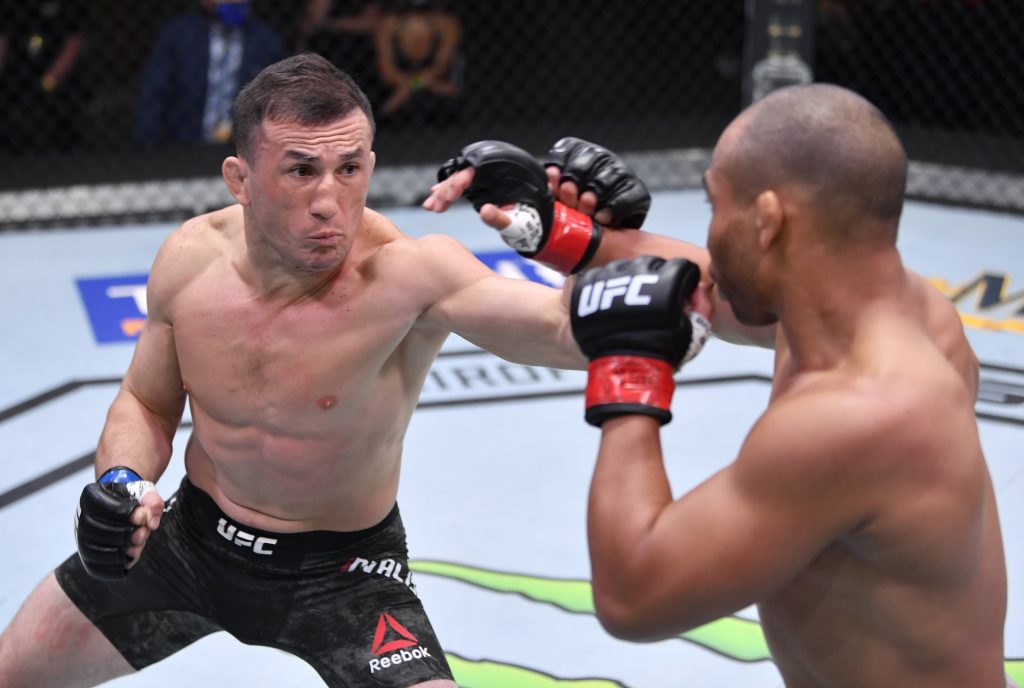
LAS VEGAS, NEVADA - AUGUST 15: (L-R) Merab Dvalishvili of Georgia punches John Dodson in their bantamweight bout during the UFC 252 event at UFC APEX on August 15, 2020 in Las Vegas, Nevada. (Photo by Jeff Bottari/Zuffa LLC)
The UFC Truth Nobody Sells – Pace Beats Power Over Time
Why Pace and Distance Decide UFC Fights
Knockouts dominate UFC promotion, but they don’t define how most fights are won. Across modern cards, decisions remain the most common outcome, especially in bouts that reach the later rounds. Fighters who manage pace, distance, and output over time consistently outperform those built around early power.
Tempo-based fighting doesn’t create viral moments, but it creates repeatable results. Over three or five rounds, sustained volume, cardio management, and positional control often matter more than raw knockout threat.
Why Knockouts Are Overvalued
Knockout-heavy records look decisive on paper, but they come with volatility. One mistimed entry, one defensive lapse, and the entire approach collapses. Fighters built around power often sacrifice volume, defensive responsibility, and long-range control.
Markets and fans respond strongly to finishes, even though:
- knockouts occur far less frequently than decisions
- finishing ability drops sharply in later rounds
- output-focused fighters influence judges more reliably
This bias skews expectations before the cage door even closes.
Pace as the Foundation of Winning on Distance
Tempo is one of the most repeatable advantages in MMA. Fighters who maintain output across rounds force opponents into reactive modes, drain cardio, and accumulate damage that rarely shows up in single highlights.
Examples are well-documented. Max Holloway built title reigns on relentless volume rather than one-shot power. Merab Dvalishvili overwhelms opponents with pressure, forcing grappling exchanges until resistance fades. Belal Muhammad wins rounds by controlling rhythm, spacing, and timing rather than chasing finishes.
These fighters don’t rely on moments. They rely on minutes. High pace influences judges through:
- consistent significant strike totals
- visible control of the Octagon
- late-round dominance as opponents slow
It’s not exciting, but it’s brutally effective.
Where the Same Logic Shows Up in Gambling
A similar pattern can be seen in gambling — not in game selection, but in session pacing. On platforms like online casino sites, the real variable isn’t which pokie you choose, but how long and how intensely you play before fatigue starts to affect decisions.
Extended sessions create cumulative strain similar to long, high-tempo fights. As spin counts rise, reaction time drops. Decisions speed up, stakes creep higher, and structure fades. The casino game hasn’t changed — the pacing has.
Convenient access points like PayID pokies online remove natural breaks between casino sessions. That compression of time increases total exposure without increasing information or edge. Faster re-entry encourages longer runs, just as constant forward pressure in a fight accelerates wear.
On platforms operating as Royal Reels casino for Australian players, sustainable play depends on controlling tempo. For example, a 300 AUD session at 1.50 AUD per spin allows roughly 200 spins. Keeping that exposure fixed preserves predictability. Extending the casino session to 300 spins increases total risk by 50% without improving expected return — a classic case of pushing pace past efficiency.
Across the broader online casino Australia landscape, results correlate more with session discipline than with feature design. Pokies don’t punish slow play, but they amplify mistakes when tempo runs unchecked. As in UFC bouts fought over five rounds, controlling pace often matters more than chasing moments of impact.
When Steady Output Beats the Hype
The underdog label often sticks to tempo fighters because their wins don’t look dramatic. Yet over five rounds, power specialists tend to slow while volume fighters stay operational.
Cardio degradation is measurable. Output drops. Defensive gaps widen. Judges notice who’s still active in rounds four and five. In title fights especially, sustained pace often outweighs early aggression.
This is why distance-ready fighters regularly outperform expectations when fights extend beyond the first half.
When Pace Decides the Fight
Several UFC bouts underline how tempo dismantles favourites. In long-form matchups, fighters who force exchanges on their terms steadily drain opponents built for early dominance. Typically, the pattern looks like this:
- early rounds remain competitive
- favourite slows by round three
- underdog’s output stays flat
- judges reward sustained control
These aren’t upsets born from chaos. They’re outcomes driven by preparation and structure.
When Tempo Isn’t Enough
Tempo alone doesn’t guarantee success. It breaks down when power disparity is extreme, defensive lapses accumulate damage too quickly, wrestling control neutralises volume. Volume fighters still need defensive awareness and positional discipline. Without it, pace becomes exposure rather than advantage.
Why the Market Keeps Missing This
The UFC economy is driven by spectacle. Knockouts headline promos, clips travel faster than scorecards, and explosive finishes dominate post-fight narratives. As a result, technical consistency and pace control are often undervalued until outcomes force a reassessment.
Fighters who win minutes rather than moments rarely generate immediate hype. Their success accumulates quietly — through sustained output, positional control, and fatigue management — traits that don’t translate well into highlight reels but consistently decide fights over distance.
Because attention follows impact, perception tends to lag behind performance fundamentals. Tempo doesn’t announce itself, but across three and five rounds, it remains one of the most reliable predictors of long-term success in the UFC.