













Understand How Sports Medicine Extends Athletic Careers
How Sports Medicine Helps Extend the Careers of Professional Athletes
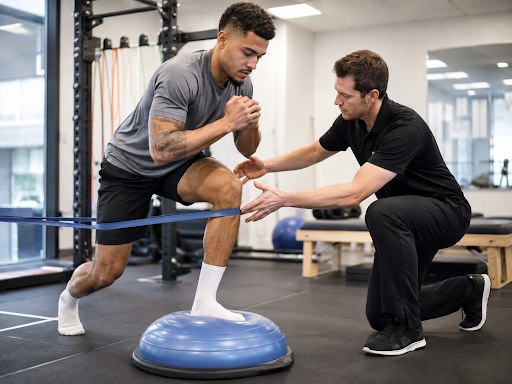
Professional sports impose great physical demands on athletes. Regular training, travel, competitions, and impacts inevitably reduce athletic performance capacity. Medicine can control these factors and prevent them from threatening an athlete’s health. A team consisting of doctors, physiotherapists, strength coaches, and nutritionists works to maintain health, support recovery, and enable the athlete to return to competition safely.
Factors such as muscle pain, sleep quality, mobility, hydration, and small deviations from proper running posture may be quite important. In Mauritania, where football enjoys widespread popularity, fans also monitor their favorite teams’ news through online sports platforms. For some sports supporters, the option to download Melbet (Arab: تنزيل melbet) can be a convenient way to check match information and place bets while following their favorite teams.
Early Detection Changes Career Planning
Sports medicine in the modern world begins before an actual injury )occurs. The medical team uses examination, movement analysis, strength testing, and even training history to detect any warning signs. An athlete might seem perfectly fine, yet exhibit poor ankle stability, low hamstring strength, and abnormal fatigue after playing several games. These kinds of symptoms can be detected early, providing ample opportunity for changes in training.
The same flow of information helps form an understanding of the game among supporters. Injuries, return dates, and players’ physical condition might influence views of a team prior to the start of the game. A user of a betting app (Arab: تطبيق المراهنات) might consider all that information, along with the team’s form, lineup, and recent games. Hence, sports medicine influences not only an athlete’s personal treatment.
| Area of sports medicine | Main role in a professional career | Practical effect |
| Medical screening | Spots health concerns before they become severe | Helps staff plan safer training |
| Physiotherapy | Restores movement and control after injury | Supports a steady return to sport |
| Strength and conditioning | Builds physical capacity around sport demands | Reduces avoidable overload |
| Nutrition support | Matches food and fluids to training needs | Helps recovery between sessions |
| Recovery planning | Organizes rest around competition and travel | Protects long-term performance |
Rehabilitation Is More Than Waiting for Pain to Stop
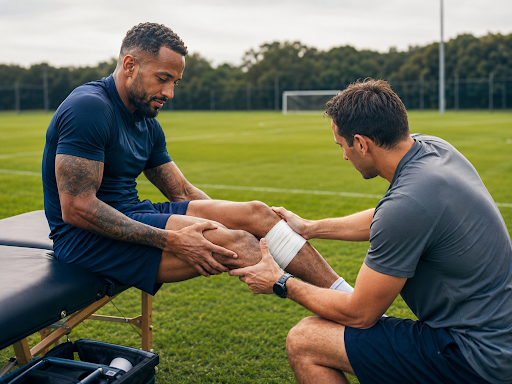
It is not enough for a professional sports person to rely on his or her ability to perform certain movements without experiencing any pain to determine that they have recovered. One’s knee joint can be comfortable with everyday physical activity but will still lack the muscle tone necessary for sprinting, jumping, and changing directions quickly.
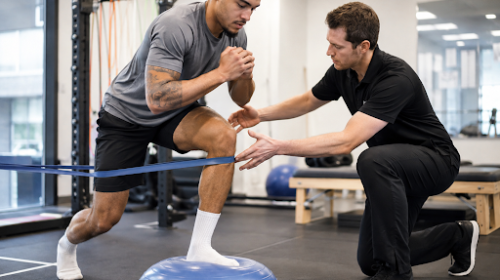
Effective rehabilitation involves the following stages:
- regain normal range of movement and basic strength;
- re-establish balance, coordination and control with load;
- improve running speed and sports-specific skills;
- determine whether the athlete is able to tolerate repetitive high-intensity efforts;
- resume training prior to full return to competition.
Order is important since the world of professional sports is less forgiving compared to regular movement. In pro ball, the defender could run, stop, turn around, and receive a hit within a few seconds while a long-distance runner can perform the same movement several thousand times during the training session.
A Safe Return Starts With the Right Timing
There is an urge to return sooner rather than later, especially when an important fixture is imminent. Sports medicine ensures that there is a systematic approach to determining whether the athlete is ready or not, depending on factors like strength assessment, performance in training, imaging, confidence in movement, among others.
There is a need for careful planning to ensure that the remaining fixtures in the season are safe. Returning to action too soon may lead to poor movement quality as the athlete will try to compensate using another limb. Planning also gives the sportsman time to build confidence in the injured part, while the coach has time to manage minutes of play.
Workload Management Keeps the Body Available
Professional athletes do not often experience problems because of a single workout. They usually occur when hard training, traveling, bad sleep, and competitions accumulate over several days. Sports medical staff monitor workload levels to help coaches adjust training to prevent excessive fatigue.
Monitoring is done through session ratings, motion metrics, heart rate monitoring, or strength retesting. Athletes still require difficult training sessions to remain competitive. The results are used to schedule hard practice on the proper days and allow sufficient recovery time.
When the training and competition take place in a hot climate, such planning is especially critical. The heat factor adds extra challenges in outdoor sessions in Mauritania. Proper hydration, session scheduling, shade, cooling, and regeneration are parts of sports medicine.
Recovery Supports Performance Between Competitions
Recovery has become an organized aspect of elite sports as the schedule leaves no room for guesswork. Sleeping, eating, hydrating, stretching, and performing light physical activity may be used by the body to recover from competition. Medical staff can assist athletes in finding proper ways to do so.
The most effective ways of recovering include:
- protect sleep if traveling or late games cause disruption of usual routine;
- provide hydration and replenishment after strenuous workouts;
- employ active recovery if total rest results in increased stiffness;
- book a session when pain causes alterations to normal function;
- decrease training volume if fatigue persists for multiple days.
Nutrition is directly involved as well. The muscles require adequate amounts of energy and protein to be repaired after workouts. Through the seasons, good nutrition habits are much more important than perfect diets once in a while. A sports dietitian can customize your diet depending on travel, match, and recovery days.
Sleep Gives the Nervous System Time to Recover
Sleep influences the speed of reaction, concentration, mood, and physical repair. Athletes who travel frequently might face difficulties due to schedule changes, late arrivals, and early team meetings. The medical staff could facilitate sleep window scheduling and minimize unnecessary disturbances before crucial matches.
It is particularly relevant for athletes who have been playing for a long time, as the requirements for recovery may vary depending on age. An experienced player may still be able to play well but require additional attention between intensive training sessions. Sports medicine allows coaches to adjust the weekly routine, not equally treating all the athletes.
Technology Gives Medical Teams Better Signals
Technology has increased accuracy in sports medicine; however, the benefit is in how people interpret the numbers. There are GPS devices that can tell the load a person runs. Force plates show how an athlete drives off both legs. Video analysis can provide information about changes in technique. The same can be said for wearables that may indicate to coaching staff any anomalies in sleep and recovery.
There is no technology that could ever substitute professional opinion. The numbers become relevant when coaches and doctors correlate them with observations and feedback from athletes.
Long Careers Depend on Better Decisions
Sports medicine enables a career extension through making the right choices continuously. The process begins with prevention, goes on through the treatment phase, and ends by taking the athlete back to full competition. Also, it includes more subtle aspects of an athlete’s professional life such as recovery, nutrition, travel, and workload management.
The fundamental rule for any athlete, whether in Mauritania or elsewhere, is always the same. The longevity of the career results from making many decisions at the appropriate moment. With the exchange of information and taking action by the medical personnel, coaches, and athletes themselves, the body will be able to withstand professional requirements constantly.