















How MMA Cutmen Control Cuts and Swelling Between Rounds
What a Cutman Does in Sixty Seconds
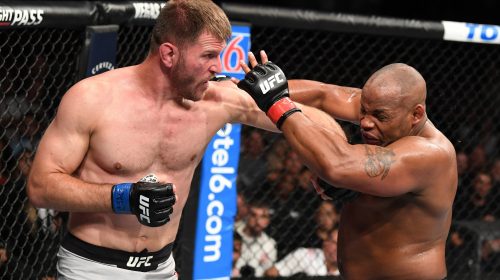
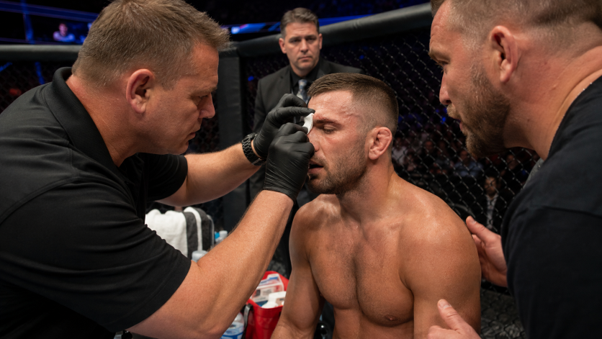
The horn ends an MMA round, but the action in each corner begins immediately. A stool enters, the fighter sits, coaches start talking and a cutman looks for swelling or blood that could bring the contest to an early finish. Everything must be assessed and treated before the official calls “seconds out.”
That minute is not simply a rest period. It is a tightly controlled medical and tactical interval involving the fighter, coaches, cutman, referee, commission inspectors and sometimes the ringside physician. Each person has a different responsibility, and none can extend the clock because a difficult cut needs more attention.
Before the Cage Door Opens
An experienced cutman watches the bout rather than waiting for the break. The location and cause of an injury provide useful information before treatment begins. A clean elbow may produce a narrow cut, repeated jabs can increase nasal bleeding, and a clash of heads may open an irregular wound.
Jacob “Stitch” Duran, whose career has included UFC, boxing and kickboxing events, has frequently described preparation as a central part of the job. Gauze, cotton swabs, an enswell and permitted solutions must be ready before the opening bell. Searching through a bag during the interval would waste much of the available minute.
A typical kit may contain:
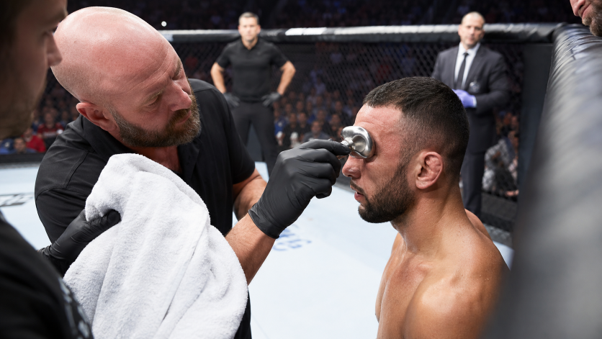
- A chilled enswell for applying firm pressure to swelling.
- Sterile gauze used to clean blood and compress a cut.
- Cotton swabs for controlled application around a wound.
- Petroleum jelly for protecting vulnerable facial areas.
- Approved coagulant solutions, depending on commission rules.
- Gloves, towels and spare materials for hygienic treatment.
The local athletic commission determines which substances are permitted. A product accepted in one jurisdiction cannot automatically be assumed legal everywhere else.
The Clock Changes Every Decision
Casino systems also use deliberate pauses to separate one period of activity from the next. At the pokies net, a timed reality check can interrupt the opportunity to place another wager and display the session duration or movement in the player’s balance. The next pokie round begins only after the notice has been acknowledged, creating a recorded decision point instead of allowing uninterrupted betting.
An MMA cutman has no comparable confirmation screen, but the principle of a defined pause remains relevant. The interval limits what can be completed and forces priorities to be established quickly.
Three Problems, Three Responses
A cutman does not treat every mark in the same way. The location, depth and effect on vision determine what receives attention first.
| Visible problem | Immediate response | Practical limitation |
| Swelling near the eye | Cold enswell and steady pressure | Excessive force can worsen discomfort |
| Active facial cut | Gauze pressure and approved solution | Deep wounds may remain unsafe |
| Minor abrasion | Cleaning and a thin protective layer | Petroleum jelly cannot repair tissue |
| Nosebleed | Gauze and controlled pressure | Breathing and possible fracture still require assessment |
Cuts demand a different sequence. The cutman clears enough blood to locate the wound, applies pressure and uses only an authorised treatment. Petroleum jelly may then be placed over the area to reduce friction and help prevent blood entering the eye. It does not close the cut or guarantee that it will survive another round.
What the Corner Cannot Do
The Unified Rules of Mixed Martial Arts published by the Association of Boxing Commissions permit petroleum jelly or a similar substance to be reapplied between rounds by an approved cutman or licensed cornerman. This permission remains narrow, and the corner must follow instructions issued by the referee, commission inspector and ringside physician.
During the break, the team cannot:
- Stitch, staple or glue a wound.
- Use an unapproved chemical or medication.
- Conceal an injury from the referee or doctor.
- Continue treatment after being ordered out.
- Prevent the physician from examining the fighter.
- Place excessive petroleum jelly on the face or body.
Inspectors may remove surplus jelly before the round begins. Because foreign substances can reduce friction during clinches and grappling exchanges, their application is treated as a regulated part of corner work rather than a cosmetic detail.
Treatment and Clearance Are Separate
A cutman manages damage; the ringside physician decides whether that damage permits safe competition. Location often matters more than the amount of blood. A cut beneath the eye may look dramatic yet leave sight unaffected. A smaller wound on the eyelid can impair vision or deepen under further strikes. No corner technique should override those risks.
The tactical coach and cutman must also avoid competing for the fighter’s attention. When the warning sounds, equipment leaves the cage and the fighter must stand. A skilled cutman may have slowed the bleeding and controlled the swelling, but the repair remains temporary. Those sixty seconds preserve the possibility of another round; the fighter, referee and physician determine whether that possibility becomes reality.