



















How A Slot Game Goes From Studio To Casino Lobby
When you open a casino and pick a slot, it is easy to assume the casino made it, owns it and runs it, much as a shop might stock its own bread. In reality the game in front of you has travelled a long and largely invisible road to reach that lobby, passing through several separate companies before a single reel ever spins on your screen.
The casino, in truth, built almost none of it. A slot is the end product of a supply chain that begins in a studio, runs through testing labs and regulators, and only reaches you after a distributor has stitched it into the casino’s platform. Seeing that journey clearly changes how you think about the games you play.
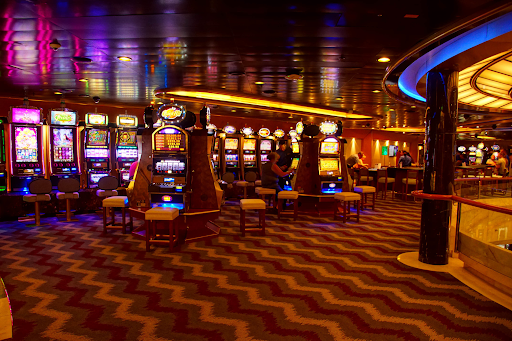
Not Made By The House
The single biggest misconception is that a casino is a games maker. It is not; it is far closer to a retailer, licensing finished products from others and displaying them under its own roof. The slot you launch is developed, owned and even run by a completely different business.
Grasping this one fact untangles almost everything else about how games reach you. The casino’s real job is to acquire the rights to show a game and to plug it into its own accounts and payments, not to design the reels or calculate the odds. The slot is usually built in web technology so it runs in any browser, and it typically executes on the studio’s own remote server, with the casino simply opening a window onto it. The reels you spin are, quite literally, running somewhere else.
By the time a player completes a stay casino login australia and opens a slot, they care only about the variety of slots on offer, the real chances of winning, the bonuses and the fast payouts, and rightly so. What almost none of them realise is that the game in front of them was built, tested and delivered by a chain of companies the casino itself had no hand in creating, which is exactly the chain worth pulling apart.
The Myths About Where Games Come From
Because the supply chain is hidden from view, players fill the gap with assumptions, and most of them are wrong. These myths make the casino seem far more powerful over its games than it actually is.
The common misreadings are these:
- The casino makes its own slots — the belief that the operator designs and builds the games it offers, rather than licensing them in.
- The casino runs the game on its servers — the assumption that spinning the reels happens inside the casino’s own systems.
- The casino can tweak the odds — the fear that an operator can quietly adjust a game’s payout to suit itself whenever it likes.
- A slot is the same wherever you find it — taking for granted that a title is identical at every casino that carries it.
Each of these hands the casino a control it does not have. The reality is a division of labour, spread across several specialist companies, in which the operator is only the final link.
The Real Supply Chain
Strip the myths away and a clear, orderly journey emerges, one that every licensed slot must complete before it can appear in a lobby. Each stage is handled by a different party with a different job.
Here is the road a slot actually travels:
- The studio builds it — a specialist developer designs the maths first of all, then the art, sound and code, fixing the volatility and the target return within the range the regulator allows, long before any player sees it.
- A lab certifies it — an independent testing house such as GLI, eCOGRA, iTech Labs or BMM Testlabs runs millions of simulated spins to confirm the results are truly random and the payout matches what is claimed, and if either test fails the game is rejected.
- A regulator approves it — the relevant authority signs the game off for each market separately, since every jurisdiction has its own rules, so one title may be cleared in some countries and still barred in others.
- An aggregator distributes it — a middleman connects the studio to hundreds of casinos through a single technical link, so no one has to integrate each game by hand.
- The operator embeds it — the casino plugs the game into its wallet and lobby, usually while the game itself keeps running on the studio’s own remote server.
Read in order, the chain shows just how little the casino touches the game itself. It provides the shopfront and the till; the product on the shelf was made, tested and delivered by others, and it often runs from a server the casino does not even own. Every party in that line has a stake in the game succeeding, which is why studios keep refining their titles and aggregators compete to carry the best of them long after a game first appears.
Why The Industry Works This Way
This elaborate division of labour is not red tape but the very thing that makes a modern casino possible. No operator could build the thousands of titles players expect, nor pass each one through certification in every market, so specialisation is the only way the numbers work.
The aggregator layer is the clever heart of it. By offering a single connection that unlocks the catalogues of hundreds of studios at once, it lets a casino fill its lobby with variety almost overnight, without negotiating and coding a separate deal for every game. One integration can bring thousands of titles from dozens of makers, which is why even a brand-new casino can launch with a library that would once have taken years to assemble. The alternative, wiring up each studio individually, would be so slow and costly that most casinos would offer a fraction of the games they do. The system exists because it turns an impossible task into a manageable one.
Who Gets Paid Along The Way
Since so many hands touch a slot before you play it, the money it earns has to be shared back down the same chain. Every spin quietly splits between the parties that built, distributed and hosted the game.
The operator typically pays a share of the revenue a game generates, often somewhere between seven and twenty per cent, to the aggregator, which keeps a slice and passes the rest to the studio that made it. That arrangement is why studios keep pumping out new titles and why aggregators fight to carry the most popular ones, since everyone in the chain earns only when players actually spin. It also explains why a casino cannot simply alter a game to pay less, since it neither owns the maths nor runs the server, and tampering would collapse the certification the whole chain depends on. Because these games are ultimately built for the house to win over time, anyone who finds their play becoming hard to control can seek free, confidential support from services such as GamCare, the National Council on Problem Gambling, or Gambling Help Online in Australia.
The Long Road To The Reels
A slot game reaches a casino lobby only after a studio has built it, an independent lab has certified it, a regulator has approved it, an aggregator has distributed it and an operator has embedded it, with the game itself usually still running on the studio’s server. The casino you play at is the last and least involved link, a storefront displaying products made and proven by others.
Knowing this reshapes how you see the lobby. The reassuring part is that the fairness of a slot rests not on the casino’s goodwill but on independent testing and regulation built into the chain long before the game ever reached you, which is a far sturdier foundation than trust in any single operator.
FAQ
Does the casino make its own slot games?
No. Slots are built by separate specialist studios and merely licensed by the casino, which acts more like a retailer. The game usually even runs on the studio’s own remote server rather than inside the casino’s systems.
How is a slot tested before it reaches a casino?
An independent laboratory such as GLI or eCOGRA runs millions of simulated spins to confirm the random number generator is truly random and the actual payout matches the advertised return, before regulators approve it for each market.
What does an aggregator do?
An aggregator is a distributor that connects many studios to many casinos through a single technical integration. It lets an operator offer thousands of games from different makers without negotiating and coding each one separately.
Can a casino change a slot’s payout?
Not on a whim. The casino neither owns the maths nor runs the game server, and altering a certified game would break the independent certification the whole chain relies on, so the payout is fixed by the studio and its regulator.