












UFC Method of Victory Betting: KO, Submission, and Decision Explained
Method-of-victory betting offers a more specific alternative to simply choosing which fighter will win. Instead of just selecting the outright victor, you must predict both the winning fighter and the exact way the fight will end. This approach demands a deeper understanding of tactical matchups. The three primary outcomes covered in this article are a knockout or technical knockout (KO/TKO), a submission, and a decision on the judges’ scorecards.
How Does UFC Method of Victory Betting Work?
A standard moneyline wager requires you to predict which fighter will get their hand raised, covering any possible winning scenario. A method-of-victory bet requires specifying both the “who” and the “how.”
Because you are narrowing the field of possibilities, sportsbooks offer separate selections for each potential outcome. For example, you might see options listed as Fighter A by KO/TKO, Fighter A by submission, and Fighter A by decision, alongside equivalent outcomes for Fighter B. Predicting both the fighter and the method requires more precision than simply predicting the outright winner, which inherently carries different risk profiles.
The available markets and specific selections can vary depending on the bookmaker, the scale of the event, and the fight itself. For example, UK readers comparing bookmakers can check 7bet UK alongside other operators to see which method-of-victory selections are available for a particular fight before finalising their analysis.
Betting on a UFC Win by KO or TKO
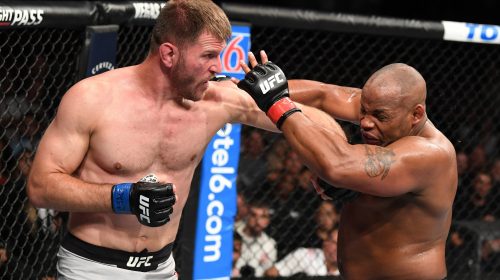
A knockout (KO) occurs when strikes leave a fighter unable to intelligently defend themselves, while a technical knockout (TKO) can result from referee, corner, or medical stoppages when the contest cannot safely continue. Sportsbooks commonly group KO and TKO together within a single betting selection.
When evaluating this outcome, you must weigh multiple factors. Fighter knockout history, raw striking power, and striking accuracy are critical, but so is opponent durability and previous stoppage losses. Weight class can also provide useful historical context. Recent UFC data puts the Heavyweight division’s KO/TKO rate at just over 50%, with knockout rates generally declining in lighter divisions. Crucially, while previous stoppage losses or a heavy-hitting reputation can guide your analysis, previous knockout results do not guarantee the same outcome in a future fight.
Betting on a UFC Win by Submission
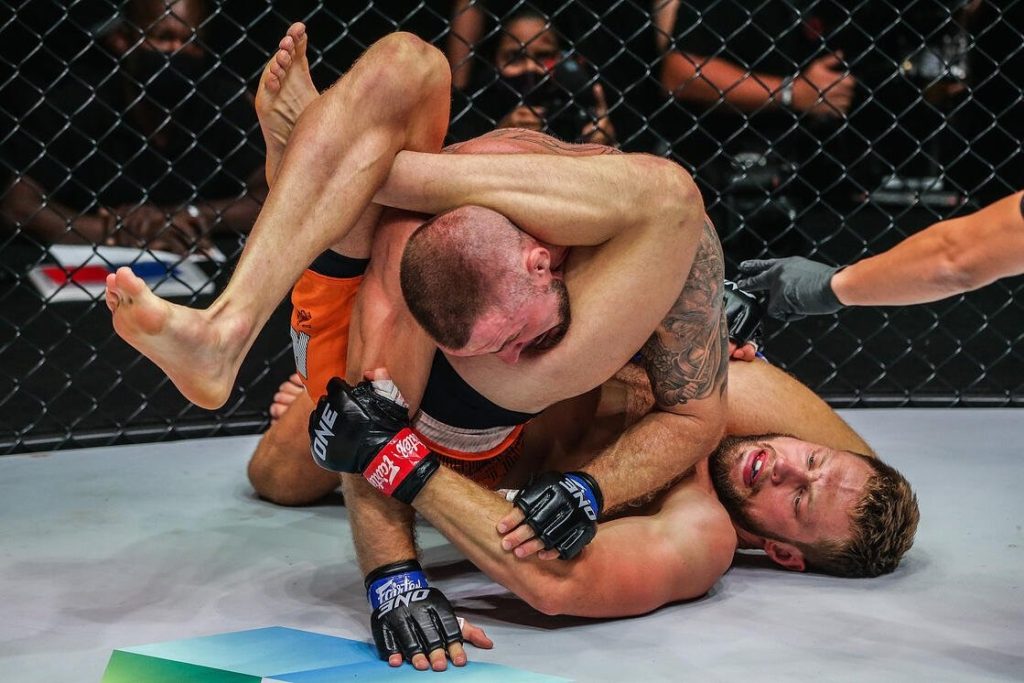
Submission victories occur when a fighter forces their opponent to concede via physical tap-out or when the referee intervenes due to a technical submission (such as a loss of consciousness).
Submission potential involves much more than simply having strong Brazilian jiu-jitsu credentials. Grappling ability only matters if the fighter can realistically force the matchup into grappling exchanges. Therefore, you must evaluate takedown ability, positional control, and the opponent’s takedown defence.
Submission attempts can carry positional or energy costs, particularly when an opponent escapes and gains a more advantageous position. You should also review submission history and previous submission losses. Interestingly, recent historical data places submission finish rates for most UFC divisions roughly in the high teens to low twenties, although individual divisions can fall outside that range.
Betting on a UFC Win by Decision
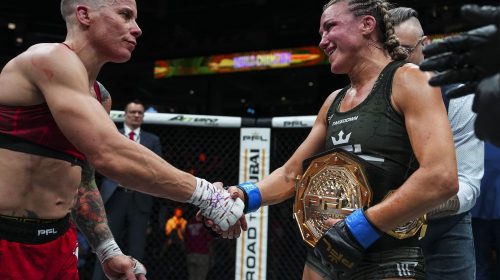
A decision occurs when a bout goes the scheduled distance and reaches the judges’ scorecards. There are three main types: a unanimous decision (all three judges agree on the winner), a split decision (two judges score it for one competitor while the third scores for the opponent), and a majority decision (two judges select a winner, and the third scores a draw).
Fight length is a critical factor when considering this outcome. A standard non-title bout is scheduled for three five-minute rounds, while title fights and main events are scheduled for five rounds. Additional rounds drastically change pacing and cardio requirements.
Whether a bout is likely to reach the scorecards depends heavily on durability, finishing rates, pacing, and fighting style. Lighter divisions are statistically more likely to end in a decision.
What Factors Can Influence the Likely Method of Victory?
Method-of-victory analysis should focus on the stylistic matchup rather than a fighter’s broad reputation alone.
Fighter Finishing History
Look at whether a fighter normally wins by knockout, submission, or decision. Avoid treating historical percentages as guarantees; a high finish rate might inflate odds but doesn’t promise a repeat performance.
Opponent’s Loss History
Examine whether the opponent has previously been stopped by strikes, submitted, or usually survives to the scorecards. Ageing fighters who take cumulative damage often experience decreased chin durability over time.
Striker vs Grappler Matchups
Fighting styles interact dynamically. A wrestler’s ability to ground a striker often overrides raw win records. Evaluate striking defence, takedown defence, wrestling, and grappling ability to determine where the fight will physically take place.
Three Rounds vs Five Rounds
Additional rounds provide more time for a finish but also require fighters to manage their pace differently, potentially lowering the frequency of early-round knockout attempts.
Recent Form and Physical Condition
Factor in reliable information about injuries, layoffs, difficult weight cuts, and recent performances. Odds movement can reflect new information, betting activity, or broader market adjustments, so it should not automatically be treated as evidence of a fighter’s physical condition.
Method of Victory vs Other UFC Betting Markets
To prevent confusion, it is important to clearly distinguish method-of-victory betting from related UFC markets:
- Moneyline: Predicts only which fighter wins, covering any winning scenario.
- Method of victory: Predicts the winning fighter and exactly how they win (KO/TKO, Submission, Decision).
- Inside the distance: Predicts that a fighter will win the bout before reaching the final judges’ scorecards.
- Fight goes the distance: Predicts whether the bout will successfully complete the full scheduled number of rounds.
- Exact round: Predicts the round in which the fight ends. Depending on the sportsbook, the market may also require you to select the winning fighter.
- Method + round: A specific wager that combines the winning method with a specific round (e.g., Fighter A by Submission in Round 2).
What Happens With a Draw, No Contest, or Disqualification?
Unusual fight outcomes can significantly affect wager settlement. Bouts occasionally end in draws, no contests, disqualifications, technical decisions, or early injury and doctor stoppages.
Settlement treatment varies heavily between sportsbooks and individual markets. For example, a draw in a standard 2-way moneyline often results in a voided bet with stakes returned, whereas a draw in a 3-way market is settled as an active outcome. Similarly, if a fight is stopped because of an injury caused by an accidental foul after enough of the bout has been completed, the judges’ scorecards may determine the result as a technical decision. You should always check the bookmaker’s specific UFC/MMA betting rules before placing your wager, as there is no universal settlement standard for every sportsbook.
A Simple Checklist Before Choosing a Method of Victory
Before locking in a wager, use this practical checklist to verify your reasoning rather than relying on gut feeling:
- How does the fighter normally win?
- How does the opponent normally lose?
- Does the stylistic matchup realistically support that method?
- Is the fight scheduled for three or five rounds?
- Are there relevant recent form factors, such as late-notice weight cuts?
- What exactly does the sportsbook include within the selected market?
- Are you making the selection based on hard matchup evidence rather than one memorable highlight?
Ultimately, combat sports are inherently volatile. No method of victory can be predicted with absolute certainty, so always maintain responsible bankroll management and treat these markets as calculated assessments.