



Is MMA Destined to Follow Boxing Down the Freak-Show Path?
If you’re someone who fears that the sports of MMA might one day drift into the same kind of spectacle-first, freakshow-esque matchmaking that boxing has embraced in recent years, we have some bad news for you: it already has. It’s just not doing it all in one place, and not all at once.
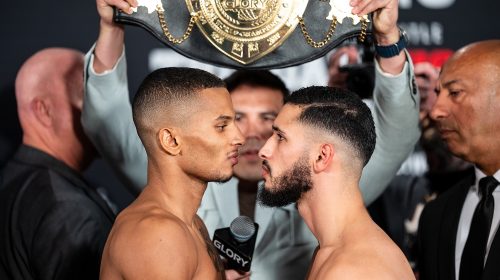
Boxing has stopped pretending it’s above this stuff. Jake Paul’s December 2025 fight with Anthony Joshua was a full-blown streaming event, the kind of crossover mismatch that would’ve sounded like satire a few years earlier, and it still drew 33 million viewers globally on Netflix. Now Oleksandr Usyk is set to defend his WBC heavyweight title against kickboxing star Rico Verhoeven in May at the Pyramids of Giza, which is exactly the sort of “you’ve got to be kidding me” booking that modern boxing now treats as premium inventory rather than with the sense of embarrassment it really ought to have about the idea.
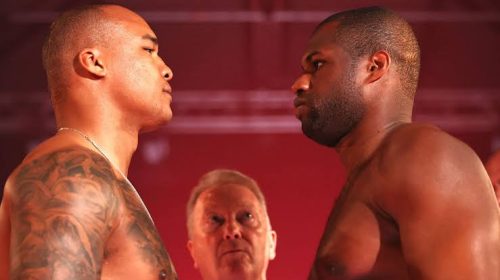
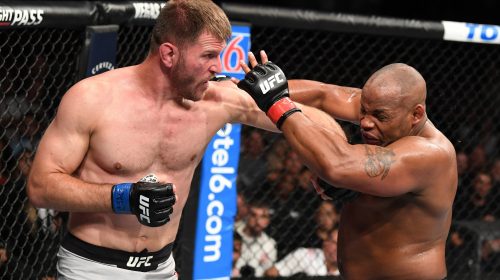
MMA, though, has never been as pure as some people like to remember. Many people reading this will remember that the early UFC years were full of loose, style-vs-style chaos, with few rules, limited weight classes and the sort of freak-show energy the polished modern product likes to pretend it has outgrown. We’ll happily name Fedor Emelianenko vs. Hong Man Choi as an example of the entertaining freak-show side of that era. So this isn’t some rogue infection about to poison a spotless sport. Freak-show matchmaking is part of MMA’s family history.
The business model is changing
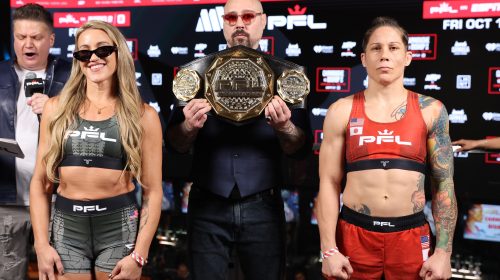
What’s changed is the business climate around it. MMA used to keep that impulse mostly at the margins, in PRIDE curiosities, Bellator nostalgia plays, or the odd hybrid-rules experiment. Now the incentives are bigger, the platforms are broader, and the names available for this kind of booking are much more commercially potent. The most glaring example of this is the news that Ronda Rousey will return to MMA this May to fight Gina Carano, headlining Netflix’s first live MMA broadcast for Jake Paul’s Most Valuable Promotions. By March, that card had also added Francis Ngannou vs. Philipe Lins and Nate Diaz’s MMA return. That is not the behaviour of an industry trying to avoid spectacle – it’s the behaviour of a fight business trying to create it.
If you strip away the press-release language, the logic is obvious. A promoter’s job isn’t to protect the sport’s integrity. Often, it’s the opposite. A promoter’s job is to make the till ring. In that sense, combat sports matchmaking can start to look a lot like someone playing their way through online casino sites hammering away at the slots, hoping the right symbols line up at the same moment to deliver the jackpot. Rousey. Carano. Netflix. Ngannou. Diaz. Perry. Put enough recognisable icons on the reels and sooner or later, the lights will flash, and you’ll get your winnings. You don’t need the purest sporting contest. You need the combination most likely to pay out. Boxing has become very comfortable saying that formerly quiet part out loud. MMA is edging in the same casino mentality direction – especially outside the UFC.
The UFC still has reasons to resist
That doesn’t mean the whole sport is doomed to become a travelling circus. The UFC still works best when it sells legitimacy, rankings, title stakes and the sense that the ladder matters. Dana White can rant all he likes about boxing being run by “rinky-dink” people, but even that rant tells you something useful: the UFC still sees value in presenting itself as the cleaner, more coherent alternative to a boxing market happy to bounce from one bizarre payday to the next. A promotion that built its empire on sporting order isn’t likely to turn the Octagon into a permanent home for novelty acts. Not because it’s morally above it, but because its brand is built on a different kind of control.
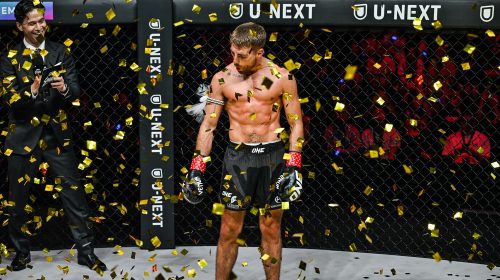
The trouble is that MMA doesn’t begin and end with the UFC. That’s why the “destined” part of the question matters. One Championship already toyed with mixed-rules theatre when it booked Demetrious Johnson against Rodtang, and many people argued at the time that this kind of stylistic crossover was a return to the sport’s original impulse rather than some new gimmick. KSW leaned into pure spectacle when Eddie Hall smashed Mariusz Pudzianowski in 30 seconds last year, and the appetite for that kind of absurdity was strong enough that Eddie Hall immediately started talking about fighting “the freaks of the world” rather than chasing real rankings. If you’re honest about the market, there is clearly a paying audience for this stuff.
Fans are part of the problem too
So the real question isn’t whether MMA will have freak-show fights. It always will. The real question is who gets to control the percentage of the calendar they occupy. If the UFC stays disciplined, it can probably keep the mainstream top end of the sport looking more like sport than stunt. But if Netflix-style blockbuster cards keep landing numbers, if Jake Paul’s promotional instincts keep bleeding into MMA, and if rival promotions realise they can buy attention faster with celebrity collisions than with honest contender building, then the edges of the sport are going to get weirder, louder and more boxing-like in a hurry.
That may not even be entirely bad. Combat sports have always had a side-show gene. Fans aren’t innocent here either. They complain about freak-show fights right up until the trailer drops and suddenly everyone’s arguing about whether the old legend can still do it, whether the outsider has a puncher’s chance, whether the giant will gas, whether the boxer can stop the takedown. It’s all tied to the age-old “what if?” question that sells almost as reliably as a title fight, and that’s why it keeps happening.
The jackpot is obvious
So no, we don’t think MMA is not destined to become boxing in full. But parts of it are absolutely destined to follow boxing’s current playbook, because the money is too big, the platforms are too hungry, and the names now available are too marketable. The only thing that’s really up for debate is how much of the sport gets pulled into that orbit, and how quickly. Boxing has already shown what happens once promoters decide the jackpot matters more than the purity of the line-up. MMA may not be there yet, but it’s close enough to hear the reels spinning.