
















Cold Plunge Recovery During Fight Camp: When Does It Make Sense?
Fight camp rarely follows a perfectly clean schedule.
One morning might start with wrestling, followed by pads in the afternoon. The next day could include strength work, conditioning, or several hard rounds of sparring. When two sessions land on the same day, there may only be a few hours to eat, rest, and get ready to go again.
That is when recovery starts to affect the quality of training.
Cold plunges have become common around combat sports, but that does not mean a fighter needs one after every session. During camp, it makes more sense to look at what happened in training, what is coming next, and whether cold water actually fits that particular recovery window.
A Hard Sparring Day Is Not the Same as a Technical Day
Five hard rounds can leave a very different mark than an hour spent drilling technique.
After sparring, the legs may feel heavy, the shoulders tired, and the whole body a little slower than usual. Hard wrestling and conditioning sessions can have a similar effect. If another demanding workout is waiting the next morning, there is not much time to turn things around.
A lighter technical day is different. There may be no reason to add much beyond a normal meal, fluids, and a good night’s sleep.
That distinction matters because recovery can easily become another checklist during camp. Foam rolling, stretching, massage, compression, cold water—doing more does not automatically mean recovering better.
Start with what the session actually demanded.
Where a Cold Plunge Can Be Useful
Cold water tends to make more sense after the sessions that leave the most fatigue behind, particularly when the next hard session is not far away.
Research on cold-water immersion has found potential benefits for perceived muscle soreness and some measures of short-term recovery after strenuous exercise. That does not mean every fighter will respond the same way, or that a plunge can erase the effects of a difficult training day.
For some athletes, though, it becomes one familiar part of the routine.
There is a practical difference between using cold water once in a while and using it several times during a demanding camp. Buying enough ice for an occasional bath is easy. Repeating the process throughout the week gets old quickly.
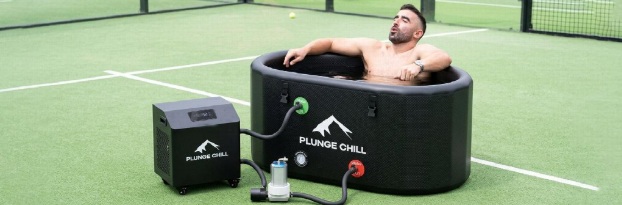
A fighter who already knows cold water has a place in the routine may find a cold plunge with chiller more practical. The water can be kept cold without hauling fresh bags of ice home before every plunge.
That convenience is useful when the habit already makes sense. It is not a reason to start plunging after every workout.
The Few Hours Between Two Sessions Matter
Two-a-days are where recovery decisions become more interesting.
Imagine finishing a hard wrestling session around noon with striking practice scheduled for the evening. There is only so much that can happen in those few hours.
The first priorities are fairly ordinary: eat, replace fluids, and get off your feet for a while.
If there is time for a nap, great. If a few minutes of mobility help with a specific area that feels tight, that may be useful too. What probably does not help is turning the entire break into a complicated recovery session.
Cold water can fit into that gap, especially for someone who has used it before and knows how the body responds. But the evening session should influence the decision.
Technical drilling is one thing. Another round of hard sparring is something else.
Recovery during camp works better when it responds to the schedule instead of following the same formula every day.
Be More Selective Around Strength Training
Strength days add another wrinkle.
Cold plunges often get grouped together with general post-workout recovery, but immediately cooling down after every lifting session may not suit every training goal.
Research has raised questions about frequent cold-water immersion directly after resistance training when long-term strength and muscle development are priorities.
For an MMA fighter, the context matters.
Early in camp, strength work may still carry a larger role. Later, the emphasis may shift toward technical preparation, conditioning, and arriving at fight week in good shape.
That does not require banning cold plunges on lifting days. It simply gives fighters a reason to think about timing instead of automatically heading for cold water as soon as the last set is finished.
Recovery Has to Be Easy Enough to Repeat
By the middle of camp, even simple tasks can start to feel like extra work.
Training times move. Coaches have different schedules. Meals have to fit between sessions. Laundry somehow never ends. Adding a recovery routine that takes another hour to prepare is unlikely to make life easier.
This is where convenience can matter more than novelty.
Having recovery equipment at home can remove some of those small logistical headaches. Plunge Chill, for example, offers cold plunge tubs and chiller systems for people who want to keep cold water ready at home without rebuilding an ice bath each time. Code Plunge10 provides 10% off eligible orders.
Still, owning the equipment should not dictate how often it gets used.
Some weeks may call for several plunges. Other weeks may call for one—or none.
Camp Changes as the Fight Gets Closer
The first week of fight camp should not look exactly like the last, and recovery does not need to stay the same either.
Earlier weeks may carry more total volume, including strength work and harder conditioning. As the fight approaches, certain workloads often come down while technical preparation becomes more specific. Hard sparring also tends to follow its own schedule rather than continuing unchanged all the way to fight night.
Cold plunge use can move with that rhythm.
A fighter may use cold water more often during a difficult stretch with several demanding sessions packed together, then use it less once the workload starts to taper.
There is no prize for keeping the same recovery routine for six or eight weeks.
The goal is to support the training that is actually happening.
Know the Difference Between Fatigue and a Problem
Feeling tired during fight camp is hardly unusual. Persistent pain, worsening injuries, or a steady drop in performance deserve more attention.
A cold plunge may change how soreness feels for a while. It cannot tell a fighter whether a knee is injured, fix a shoulder problem, or make an excessive training load sustainable.
Those situations belong with coaches and qualified medical professionals rather than another recovery tool.
Cold exposure itself is not suitable for everyone either. Fighters with cardiovascular concerns or other health conditions should seek appropriate medical guidance before making it part of their routine.
Weight cutting should also remain separate from the discussion. Cold plunging is not a substitute for an appropriate weight-management strategy.
Let the Training Decide
Some of the best recovery days are boring.
Eat enough. Replace fluids. Get home. Sleep.
After a hard night of sparring or a brutal conditioning session, adding a cold plunge may make sense for a fighter who already responds well to it. After another session, there may be little reason to use one at all.
That is a better way to think about cold plunges during fight camp.
They are not something that has to follow every workout, and they are not a replacement for the habits that keep an athlete training consistently. They are simply one option that can be used when the schedule, the session, and the athlete make it worthwhile.
During fight camp, recovery does not need to be complicated. It needs to help the fighter come back ready for the work that is still ahead.