








What Happens Against the Cage: How to Read MMA’s Most Overlooked Exchanges
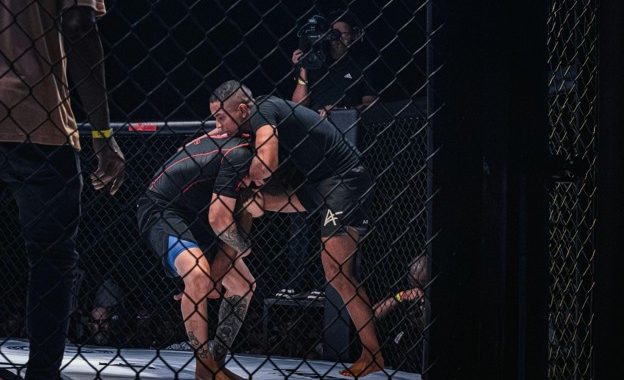
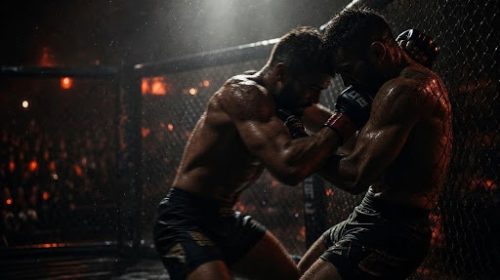
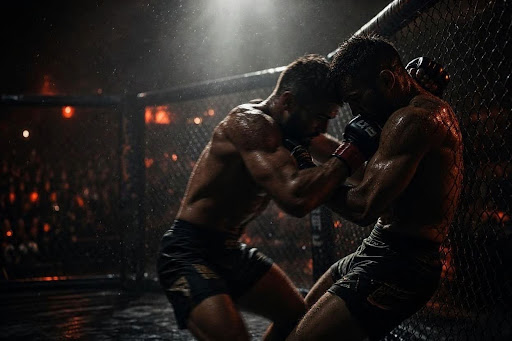
Two fighters can appear motionless against the fence while the exchange changes underneath them. A wrist becomes trapped, a head slips inside, or a defender turns one hip away from a takedown. Those small movements help explain whether pressure is producing an attack or simply keeping both athletes in place.
Digital services compete for attention during a fight, from live results to betting-related pages such as 1xbet دانلود. They belong to the viewing experience, but understanding the cage exchange requires watching the fighters themselves. Access to another platform adds little if the decisive grip change happens while your eyes are elsewhere.
The Positions That Decide Cage Exchanges
Begin with the hands and arms. An underhook places an arm beneath the opponent’s arm, helping the fighter influence the upper body. Pummelling is the repeated work of swimming the arms into a more useful inside position.
An underhook is an advantage to develop, rather than an automatic takedown. Watch whether the fighter combines it with posture, foot placement and control of the other arm. A defender who frees a wrist or inserts a forearm frame can disrupt that combination.
Head position supplies another clue. A fighter can use head placement against the opponent’s upper body to influence posture and limit comfortable movement. The useful question is whose alignment allows the next action, rather than whose forehead looks busier.
Now look down at the hips and feet. A defender may widen the base, move the hips away or turn so the attacker cannot connect the hands effectively. A successful reversal changes which fighter faces the fence, but the following action determines whether the reversal becomes meaningful offense.
Control, Effective Offense and Visible Progress
For UFC viewing, use the Unified Rules framework and check the version adopted for the event. UFC identifies the Unified Rules as its governing framework. The ABC’s current judging guidance prioritises effective striking and grappling, followed by effective aggressiveness only when the first category is even, then fighting-area control if both earlier categories are even.
That hierarchy makes a stopwatch an incomplete judging tool. Holding someone against the fence does not automatically outweigh damaging legal strikes or effective grappling elsewhere in the round. Equally, a takedown should be assessed through the attack and impact it produces, rather than treated as a fixed points award.
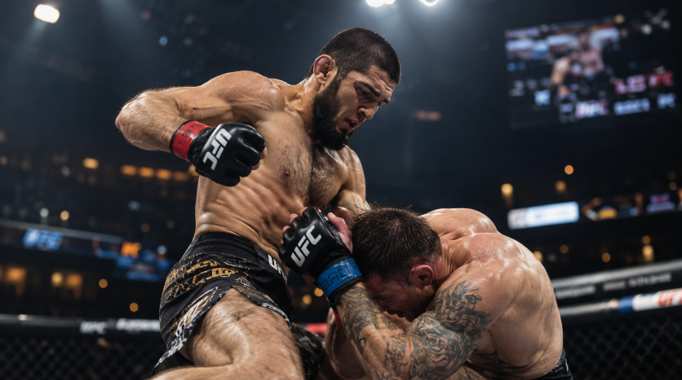
Ronda Rousey’s first-round finish of Sara McMann at UFC 170 illustrates the difference between location and offense. UFC’s contemporary report describes McMann resisting Rousey’s takedown while both fighters exchanged close-range strikes against the cage. Rousey then landed a knee that dropped McMann and followed with punches; the stoppage came at 1:06.
The useful sequence is the defended takedown, continued clinch striking and a strike with a visible effect. Being upright had not ended McMann’s defensive task. This example demonstrates an attacking consequence, without requiring a retrospective claim about how judges would have scored an unfinished round under later guidance.
A second episode appears in round three of Leon Edwards against Kamaru Usman at UFC 286. UFC’s report records a point deduction against Edwards for grabbing the fence to prevent a takedown. The apparent defensive success therefore included an illegal action and a separate scoring penalty.
When reviewing that moment, watch the gripping hand alongside the takedown attempt. It is a reminder to distinguish legal positional defense from physically stopping an action by holding the mesh. A stopped takedown alone does not tell the whole story of the exchange.
What to Watch When the Action Looks Static
Follow one positional question through to its outcome. Does the inside arm lead to a turn, a body lock or a clean strike? Does the defender escape, reverse the position or merely postpone the next attempt?
Look for these signs of an improving position:
- Inside arm position combined with stable posture.
- Wrist control that restricts the opponent’s defensive hand.
- Head placement that creates room for the next action.
- Footwork that opens a turn or takedown angle.
- Legal strikes with a visible effect.
- A transition into a credible submission or sustained attack.
If betting forms part of viewing, operator margins create a long-run advantage and losses are possible. Set spending and time limits, and avoid chasing losses.
The cage becomes easier to read when you track position, transition and effect together. Pressure can create an opportunity, but the opportunity still needs an effective action. Keep watching the hands, hips and next attack, even when the broadcast picture seems still.