











How Matchups Influence Fight Predictions From a UFC Betting Perspective?
How Strikers Stand Against Grapplers In UFC Fight Predictions?
Mixed martial arts is a sporting arena where different fighting philosophies and schools of thought collide. The classic «striker versus wrestler» rivalry has captivated fans, professional coaches, and sports analysts for decades. For those interested in UFC betting, understanding of this classic clash of styles is the key to fight predictions. After all, stylistic features determine the nature of a fight, its pace, and the winner.
Even though MMA has evolved and fighters have become versatile «hybrids», the basic skills and instincts ingrained early in a fighter’s career come to the fore in critical situations. Let’s examine how the balance of power between a strong striker and a dominant wrestler influences analysis and the making of predictions.
Historical Context – Where It All Began
To fully understand modern analytics, it is worth looking back. The first UFC tournaments were created to answer the question: whose martial art is more effective? Back then, fans saw experimentation: a one-gloved boxer versus a Brazilian jiu-jitsu master, a sumo wrestler versus a karate fighter, and even a professional wrestler vs Muhammed Ali.
Back then, wrestlers and grapplers dominated, particularly Royce Gracie, who demonstrated that if you take a striker to the ground, their striking power is reduced to zero. Over time, strikers learned to defend against takedowns, giving rise to the sprawl-and-brawl style. This historical pendulum continues to swing today, forcing analysts to weigh the athletes’ chances before each tournament.
Anatomy of Styles – Strengths and Weaknesses
When predicting a fight, as many UFC betting analysts do, you should analyze the arsenal of both fighters.
There is a certain pattern for each type.
The Striker Paradigm
A striker – boxer, kickboxer, Muay Thai practitioner strives to keep the fight standing. Their main goal is to inflict maximum damage at range, using speed, precision, and timing. Among the advantages of these fighters:
- The ability to finish the fight with one precise strike – puncher’s chance.
- Less energy is expended on movement compared to grueling wrestling.
- Spectacularity, which often attracts judges’ favor in evenly matched fights.
Among weaknesses:
- Fear of a takedown forces a striker to lower their hands lower than usual, exposing their head to punches.
- Once on their back, a pure striker quickly loses stamina and self-confidence.
These are things to consider when looking at the striker.
The Wrestler’s Paradigm
A wrestler – freestyle wrestler, classical wrestler, sambo wrestler, or Brazilian Jiu-Jitsu master tries to find a way to close the distance, enter a clinch, and bring the fight to a horizontal position. On the ground, they use ground and pound, or seek out painful or chokeholds.
Among the advantages:
- Control over the pace and location of the fight. The wrestler decides where the fight takes place.
- Exhausting the opponent. Wrestling requires tremendous isometric tension, which strikers are often unprepared for.
- Dominance in the eyes of the judges through control from above.
There are certain vulnerabilities:
- Danger of being hit by a counter-knee or uppercut when attempting to take the fight to the legs.
- Limited arsenal on the feet if the fight cannot be brought to the ground.
These are all the pros and cons of almost any wrestler.
Key Factors For Making a Forecast
To predict style matchups, you cannot rely only on the fighters’ basic characteristics. There are hidden factors that change the balance of power in the octagon. Many forget that fights take place in cages of varying sizes.
A standard octagon has a diameter of 30 feet. This gives a striker room to maneuver. They can circle, retreat, and fire at their opponent from a distance. In such conditions, it is more difficult for a wrestler to corner their opponent.
A smaller octagon, like the UFC Apex, has a diameter of 25 feet. In such a cage, the area is 30% smaller. This is a huge advantage for wrestlers. They need to take fewer steps to pin a striker to the fence, where defending takedowns becomes more difficult. When predicting, consider the arena.
Cardio and Energy Management
Standing endurance and ground endurance are two different types of physical training. A striker is accustomed to aerobic exercise: running, explosive strikes, and recovering from a standing position. A wrestler uses anaerobic exercise and isometric tension: constant bodyweight pressure, twisting, and holds.
An important point – defending against grappling takes much more energy from a striker than grappling itself takes from a wrestler. If a striker spends the entire first round on his back, trying to escape from a heavy grappler, his arms will become leaden in the second round, and his punches will lose their knockout power.
When analyzing a line, many sharp bettors use a value betting software to track real-time market movements before studying the fighters’ stats in the later rounds. If a wrestler is prone to fatigue due to a difficult weight cut, the striker’s chances increase by the third round.
Takedown Defense Rate
This is a key statistical metric. If a striker has a Takedown Defense rate above 80%, it means they successfully block 8 out of 10 takedown attempts. Statistics can be deceiving. It is important to consider who exactly they have fought. Defending a takedown by an average wrestler and defending a takedown by a top-tier Olympic wrestling champion are two completely different challenges.
It is important to evaluate a striker’s ability to get up from the ground. Even if a wrestler manages to get a takedown, how quickly can they use the fence to return to their feet? The faster they get up, the fewer control points they receive.
Psychological War of Styles
Predicting the outcome of a fight in MMA is not just about mathematics and statistics; it is also about psychology. Puncher versus wrestler confrontations are always accompanied by mutual fear, which alters the athletes’ behavior.
Fear of a Takedown
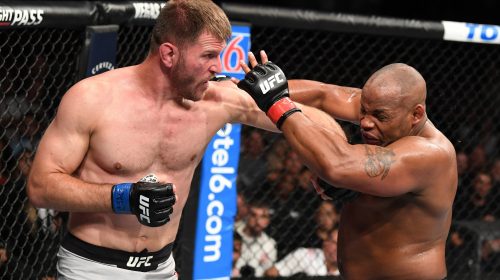
When an elite kickboxer faces a dangerous wrestler, their stance changes. They are forced to move their weight to their back foot to pull their front foot back when attempting a takedown. They lower their hands below their chin to catch the wrestler’s arms in time, to get an underhook. Because of this fear, the striker loses some of their combination power and becomes vulnerable to even the wrestler’s mediocre striking, remember the knockdown Khabib Nurmagomedov gave Conor McGregor.
Fear of a Knockout
Wrestlers facing tough knockout artists often act too hastily. Fearing a blow when closing in, they may resort to so-called «panic runs» – jumping at the opponent’s legs from a great distance, without any preliminary strike preparation. Such runs are detected and punished. An experienced forecaster always evaluates a fighter’s ability to maintain composure and stick to their game plan while under the psychological pressure of an opponent’s style.

The Age of Station Wagons – The End of the Clean Styles
Despite the appeal of the «striker vs wrestler» concept, it is important to recognize that in today’s top-level MMA, in the top 10 of any UFC division, there are no pure, one-dimensional fighters left.
Today, fans are dealing with «hybrids», where the basic style is merely a foundation. When analyzing a line, it is important to look not only at a fighter’s basic background but also at how they’ve developed over the past 2-3 years. If a basic kickboxer moves to a wrestling gym and spends a full training camp there, his defense against transfers could come as an unpleasant surprise to both his opponent and those who bet against him.