








Ready 4 War: Everything You Need to Know About Jake Paul vs. Nate Diaz
The August 5, 2023 crossover bout between Jake Paul and Nate Diaz sits in a strange corner of combat sports history, the kind of event that generates genuine MMA news cycles while also
making purists grind their teeth. Billed as “Ready 4 War,” the Nate Diaz vs Jake Paul matchup drew 450,000 pay-per-view buys and roughly $27 million in revenue, numbers that demand at
least some respect regardless of your feelings about the spectacle. The gate added another $3.1 million, and those figures alone explain why crossover boxing refuses to disappear from
the conversation no matter how many traditional fans wish it would.
How the Fight Was Announced and Structured
Most Valuable Promotions and Diaz’s own company, Real Fight Inc., announced the bout on April 12, 2023, framing it as a 50-50 promotional collaboration. That detail matters because it
was the first time Diaz had ever promoted himself, and the first time he’d competed outside the UFC in 15 years. He’d finished his UFC contract in September 2022 with a submission win over
Tony Ferguson, then spent months making clear he wanted professional boxing. This was his debut in that sport.
The original contract called for eight rounds at a 185-pound catchweight with 10-ounce gloves.
Both camps agreed in June 2023 to extend it to ten rounds. Small adjustment on paper, significant in terms of what it signals about both men’s confidence going into fight week.
The Venue and Broadcast Details
American Airlines Center in Dallas, Texas hosted the card. The main event ring walks were scheduled for around 11 p.m. ET, with the full card beginning at 8 p.m. ET. DAZN distributed the
fight globally on pay-per-view, and ESPN+ carried it in the United States at $59.99. UK viewers who weren’t DAZN subscribers could purchase it for £14.99.
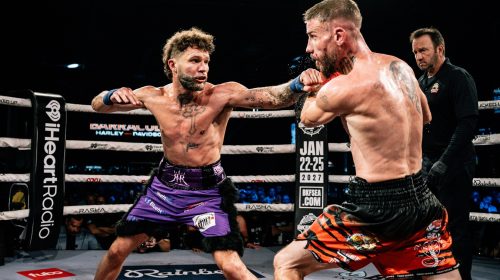
The co-main event featured undisputed featherweight world champion Amanda Serrano against former WBO featherweight title holder Heather Hardy, which gave the card genuine competitive
credibility beyond the main attraction.
Who These Two Men Were Coming In
Jake Paul entered at 26 years old with a professional boxing record of 6 wins and 1 loss. That single loss came against Tommy Fury in February 2023, making the Diaz fight his comeback.
The YouTube-to-boxing pipeline that Paul built is genuinely strange when you map it out, but by this point he had logged real rounds against real opponents, and the pre-fight odds reflected
that: Paul was listed at 1/3, Diaz at 3/1, and a draw at 14/1.
Nate Diaz arrived at 38, stepping into a boxing ring professionally for the first time in his life. His MMA background is extensive, the Stockton native built a reputation in the UFC over years of brutal, high-volume fights. Finishing Tony Ferguson by submission to close out his UFC chapter was a strong exit. But boxing is a different animal entirely, and his debut against a 26-year-old with seven professional fights already logged was not a gentle introduction.
The Result and What the Numbers Say
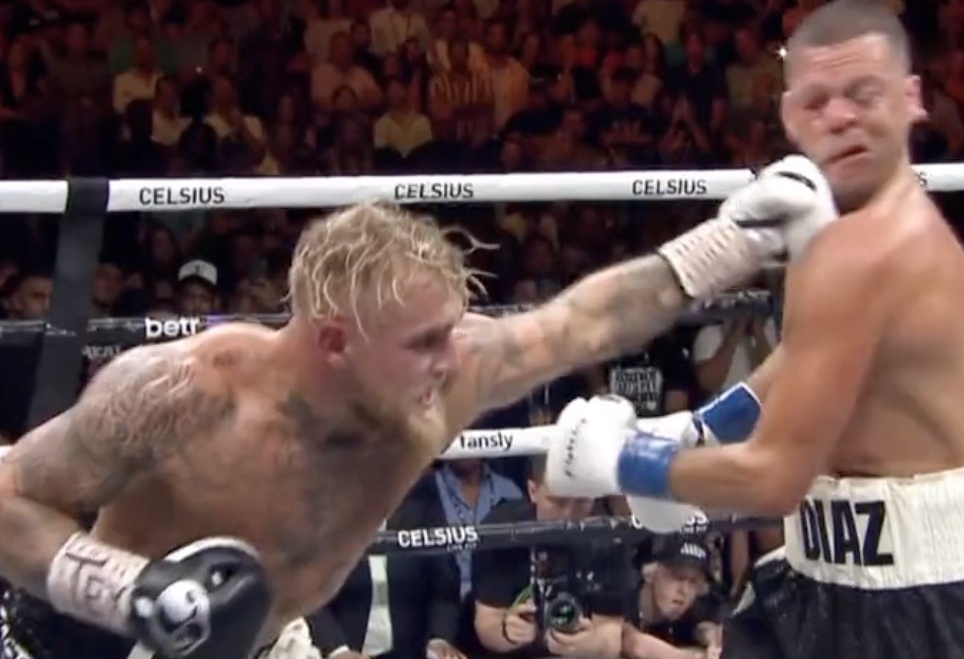
Paul won by unanimous decision across ten rounds. The exact scorecards from the judges aren’t confirmed in available sources, but the decision itself was not disputed in any meaningful
public way after the event.
The financial picture is worth sitting with. Around 450,000 PPV purchases at $59.99 a unit in the US market alone generates a significant revenue pool before international sales are counted.
The reported $27 million total and $3.1 million gate are Wikipedia-sourced figures without confirmed primary financial disclosure, so treat them as estimates rather than audited facts. Still,
even as estimates they indicate an event operating at genuine commercial scale.
For context, anyone tracking the broader MMA results and UFC results landscape in 2023 would know that crossover events like this one were generating comparable or stronger numbers than
several traditional promotions. That’s not a permanent state of affairs, but it was the reality of that particular moment.
What Made This Event Unusual
The structural oddity here is the dual-promotion model. Most combat sports events run through a single promotional entity, which controls the football matches schedule equivalent of a fight
card: who fights whom, in what order, under what terms. Here, two competitors co-promoted their own bout, with Diaz’s Real Fight Inc. holding equal standing to Paul’s Most Valuable
Promotions. For an athlete who spent his entire career under the UFC’s promotional umbrella, that independence was new territory.
The cruiserweight catchweight of 185 pounds placed both men in a weight class that doesn’t map cleanly onto standard boxing divisions, another marker of how purpose-built the event was for these two specific fighters rather than for any sanctioned title picture.
The Broader Moment in Combat Sports
Events like this one live alongside the traditional sanctioned world, not inside it. Fans who track UFC weigh in results and follow established rankings tend to view these crossover cards with
skepticism, and that skepticism isn’t irrational. A professional boxing debut at 38, against someone who came up through YouTube rather than amateur boxing programs, doesn’t carry
the same weight as a world title eliminator.
The MMA results that actually move the sport forward come from places like UFC 305 or UFC 327, where ranked fighters with years of camp investment settle genuine competitive questions.
Crossover events answer a different question entirely, specifically whether celebrity adjacency and combat sports spectacle can coexist commercially. On August 5, 2023, in Dallas, the
answer was clearly yes.
Paul’s trajectory from content creator to someone discussed in the same news cycles as UFC MMA coverage and the occasional Conor McGregor comparison is genuinely bizarre and also
genuinely real. The Diaz fight didn’t elevate him into the upper tier of professional boxing, but it extended the commercial story he’d been building since his first fight. Diaz walked away having completed his boxing debut on his own terms, under his own promotional banner. For a fighter who spent over a decade inside the UFC’s structure, that exit and reinvention is the more interesting story.