










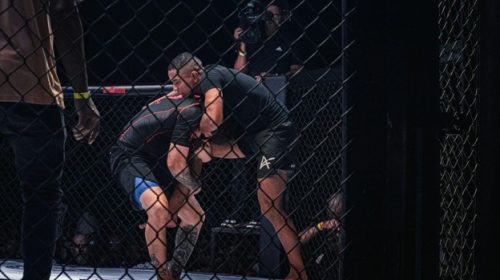


Where CBD Fits in a Training Week
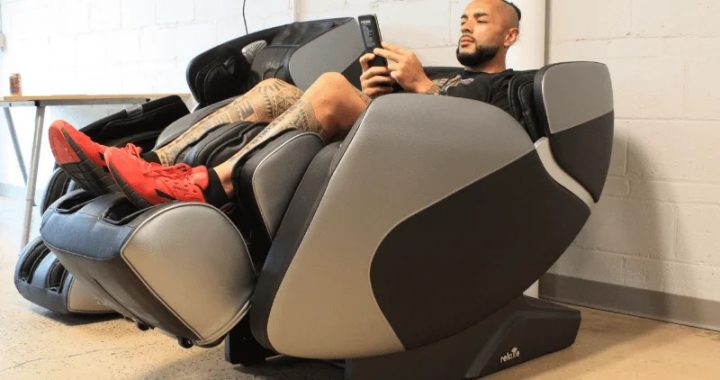
Every camp has a plan for the hard part. Sparring days are on the whiteboard, strength work is programmed, the cut is mapped out to the day. What almost nobody plans is the other half of it, the ten or eleven hours between the evening session and the morning one. That gap is where the adaptation actually happens, and it is the first thing to fall apart around week four. The routines that survive a full camp are always the boring, frictionless ones. A fixed lights-out. A shake you do not have to think about. The Joy Organics capsules that live in the gym bag and need no dropper, no measuring, and no clean surface at ten at night when you got home from the gym forty minutes ago.
This is not an argument that any supplement is going to change your camp. It is an argument for treating the recovery half of the week with the same structure you give the training half, and for understanding where something like this does and does not sit inside that.
The Half of Camp Nobody Programs
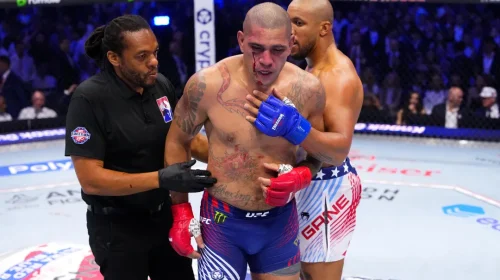
Mixed martial arts has a volume problem that most sports do not. A single training week can include striking, wrestling, jiu jitsu, strength and conditioning, and roadwork, and each of those was designed by someone who assumed it was the main thing you did.
Stack them, and the training load is enormous, but the recovery load stays whatever it was. Most amateur camps do not periodize at all. They just add sessions until the fighter breaks or the fight arrives, whichever comes first.
The fix is not more recovery gadgets. It is deciding in advance what the easy days actually look like and then protecting the sleep, because that is where the return on all that work either shows up or does not.
What Actually Happens While You Sleep
Sleep is not passive time. Deep slow wave sleep is when the bulk of physical repair happens, and it is also when motor learning consolidates, which is the part that fighters underrate.
That armbar detail your coach fixed on Tuesday does not become yours during the drill. It becomes yours overnight, as the movement pattern gets encoded. Cut the sleep, and you have still done the reps, but you keep less of the skill.
Research on athletes who deliberately extend their sleep is fairly consistent about the direction of the effect, with improvements in reaction time, sprint performance, and accuracy showing up simply from spending more hours in bed. Nothing you can buy competes with that.
The Week Four Problem
Ask anyone who has been through a few camps when it goes wrong, and most will say the same thing. Weeks one and two feel great. Week three is fine. Somewhere in week four, the wheels start to loosen, and the symptoms are always the same: heavier legs, a shorter fuse, worse sparring, and sleep that has quietly degraded without anyone noticing.
That is, accumulated sleep debt meets accumulated training load. It is entirely predictable and it is almost never planned for, because camps are built forward from week one rather than backward from the point where people historically fall apart.
If you know week four is the pressure point, build the deload before it rather than after it, and put your most protected sleep week right there.
Mapping the Week
The useful mental model is to treat recovery as something with a dose, the same way you treat training.
Hard days, meaning live sparring or heavy strength work, need the most protection on either side. Eat properly afterward, get the session finished earlier if you have any control over the schedule, and give the evening real attention. Moderate days, technical drilling and positional work, are more forgiving. Genuine easy days should be genuinely easy, which for most people means a walk and some mobility rather than a light session that quietly becomes a hard one.
Where an evening routine fits is on the hard days and the days after them. It is not something you do more of when the camp gets heavier. It is something you keep identical while everything else fluctuates, because a routine only works if it is the same every night.
Why the Evening Is the Difficult Part
Here is the specific mechanical problem with combat sports. You finish sparring at half past eight. You are wired, sore, still replaying the round where you got caught, and your body is a long way from the state it needs to be in to sleep. Then you eat late because you could not eat before, and you are in bed at midnight with your heart still going.
Add a weight cut, and it gets worse. Restricted food and water disrupt sleep on their own, caffeine intake usually climbs as calories drop, and fight week anxiety arrives on top of all of it.
The answer is a deliberate buffer. Thirty minutes between the last thing and the pillow, spent off screens and away from fight footage. Get the room cold. Keep the routine identical, because the repetition is what eventually teaches your nervous system that the day is closed.
Format Matters More Than People Expect
A lot of people quit a supplement not because it failed but because taking it was annoying. Oils involve a dropper, a measurement, and a taste, and after a hard session at ten at night that is three more decisions than most people have left.
Capsules remove all of it. There is nothing to measure, nothing to taste, nothing to spill in a gym bag, and it takes the same two seconds every night, whether you are at home, in a hotel before a fight, or asleep on your feet after a Thursday session. The Joy Organics capsules are certified organic as well, which carries a bit more weight when something is a daily habit across an eight-week camp rather than an occasional thing.
The other practical point is consistency. A fixed amount every night means that if you decide after a few weeks that it is not doing anything for you, that conclusion is actually worth something. Guess the amount each time, and you never learn anything from the experiment.
The Testing Question
This is the part that matters more in this sport than in almost any other, and it deserves its own paragraph rather than a footnote.
The UFC’s anti-doping policy no longer treats a positive carboxy THC test as a violation on its own, and other naturally occurring cannabinoids came off its prohibited list at the same time. But that is one promotion. State athletic commissions set their own rules, and they vary considerably, from states that have stopped testing for cannabis entirely to ones that still sanction it. If you also compete in grappling under a body that follows the World Anti-Doping Code, THC remains prohibited in competition above the threshold there.
The practical consequence is straightforward. Full-spectrum products contain trace THC by definition, legally under the limit but not zero, and in a strict liability system, what ends up in your body is your responsibility, regardless of how it got there. If you are tested by anyone, choose a broad spectrum or isolate product with no detectable THC, get the batch-specific lab report for the exact lot you bought, and keep it. Check your own commission’s current rules rather than assuming, because they have changed several times in recent years.
What This Is Not
It is not a recovery method, and it does not replace anything on the list above it. Sleep, food, and sensible programming account for nearly all of your recovery, and no capsule moves the needle against a camp that is badly built.
It is also not the answer to an injury. Pain that is getting worse, joint pain that lasts weeks, numbness, or anything that changes how you move needs a professional rather than a wind-down routine. Fighters are unusually good at ignoring this and unusually bad at the consequences.
And if you take prescription medication, ask a pharmacist first. It takes two minutes.
Building the Week
Decide your hard days in advance and protect the twelve hours after each of them. Put the deload before week four instead of after. Treat sleep as a session you have scheduled rather than as the thing that happens if there is time left.
Then, if you are going to add anything to the evening, add one thing, keep it identical every night, and give it a few weeks before you have an opinion about it. The camps that go well are rarely the ones with the most in them. They are the ones where the boring parts happened every single day.