











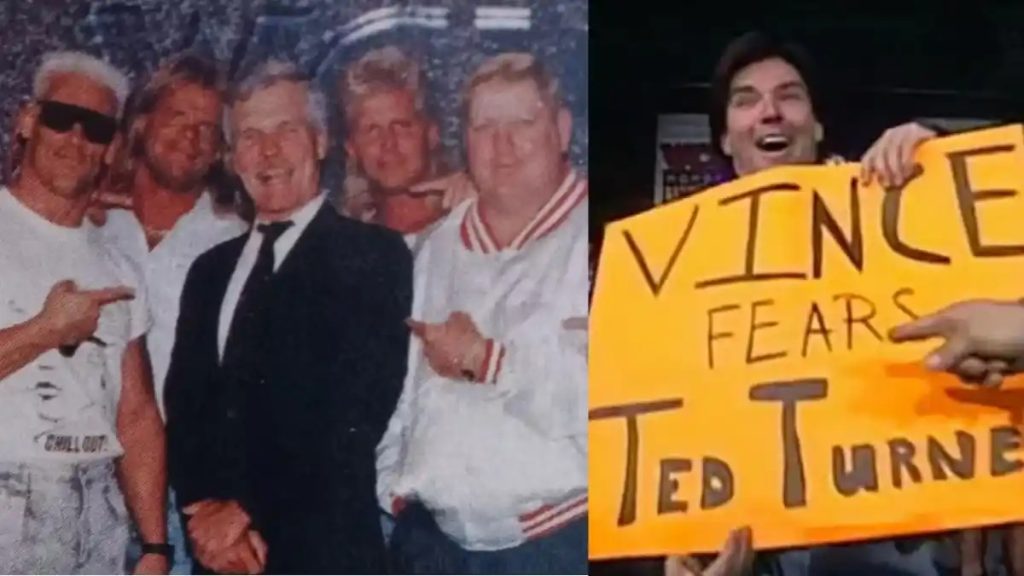
Ted Turner, former WCW owner and founder of CNN, dead at 87
Ted Turner, the famed founder of the Cable News Network (CNN), the first 24-hour cable news channel, and former owner of World Championship Wrestling (WCW), has died at age 87.
The entrepreneur had been suffering from the Lewy body dementia, a brain disorder, at the time of his unfortuante passing.
Turner’s ownership of WCW from 1988 until its eventual sale in 2001 remains one of the most fascinating chapters in television and sports entertainment history.
The Acquisition and Strategic Vision
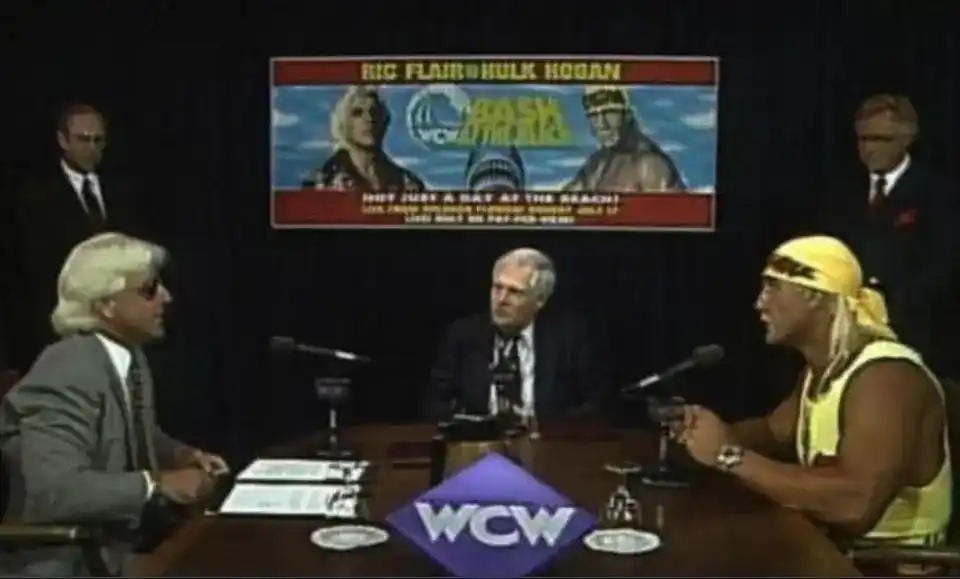
In late 1988, Ted Turner’s Turner Broadcasting System purchased Jim Crockett Promotions, a prominent promotion in the National Wrestling Alliance (NWA) that was facing severe financial difficulties. Turner’s motivation was primarily strategic: professional wrestling had historically been a reliable ratings draw for his SuperStation, TBS. Rather than risk losing a staple of his programming lineup, Turner bought the company and rebranded it as World Championship Wrestling.
Turner provided the financial backing necessary to compete with Vince McMahon’s World Wrestling Federation (WWF, now WWE), which had established a near-monopoly on the industry during the 1980s. With Turner’s checkbook, WCW was able to secure national television clearance, improve production values, and eventually lure top talent away from their primary competitor.
The Monday Night Wars
The pinnacle of Turner’s involvement in professional wrestling came in the mid-1990s. Under the leadership of Executive Vice President Eric Bischoff, WCW launched WCW Monday Nitro in September 1995 on TNT. This live program aired directly against the WWF’s flagship show, Monday Night Raw, igniting a fierce ratings battle known as the “Monday Night Wars.”
Turner’s willingness to invest heavily allowed WCW to sign massive stars such as Hulk Hogan, “Macho Man” Randy Savage, and Kevin Nash. The introduction of the New World Order (nWo) storyline in 1996 propelled WCW to the top of the ratings, defeating the WWF in viewership for 83 consecutive weeks. During this period, Turner’s wrestling division was not just a programming filler; it was a highly profitable cornerstone of his television empire.
The Corporate Merger and the End of an Era
Despite its monumental success, the late 1990s saw WCW’s fortunes rapidly decline due to creative missteps, guaranteed contracts, and internal mismanagement. However, the ultimate demise of WCW was sealed in the boardroom rather than the ring.
The merger of AOL and Time Warner (which had previously acquired Turner Broadcasting) in 2001 created a new corporate culture that did not view professional wrestling as a suitable fit for its portfolio, despite Turner’s personal loyalty to the product. With Turner’s power within the newly merged conglomerate significantly diminished, corporate executives canceled WCW programming on TNT and TBS.
Without a television home, the company’s value plummeted. In March 2001, Vince McMahon purchased the assets, trademarks, and video library of WCW for a fraction of its former value, effectively ending the Monday Night Wars and Turner’s run as a wrestling promoter.
Legacy
Ted Turner’s foray into professional wrestling remains a critical case study in media integration. He proved that with deep pockets and a prime cable television platform, a competitor could legitimately challenge and briefly overtake a deeply entrenched industry leader. Today, Turner’s influence is still felt, as the template he established for nationally televised, corporate-backed professional wrestling paved the way for modern promotions in the television landscape.