







Top MMA Training Techniques Used by Professional Fighters
Mixed martial arts is, by common consensus, the most demanding combat sport on the planet. To compete at the professional level, a fighter cannot simply be a good boxer, or a solid wrestler, or a capable grappler. They must be all of these things simultaneously — and they must be able to transition between disciplines seamlessly, under pressure, in front of a crowd, against someone who is trying to do the same to them.
The training methods that produce elite MMA fighters have evolved dramatically over the past two decades. What was once a collection of loosely combined martial arts has become a sophisticated, science-backed system of skill development, physical conditioning, and psychological preparation. Much like mastering a Hidden Jack login requires understanding a specific process rather than relying on guesswork, succeeding in modern MMA demands a structured approach to training and continuous improvement. Understanding these techniques matters not only for aspiring professional fighters, but for anyone who wants to train with genuine purpose and intelligence.
1. Striking: The Foundation of the Stand-Up Game

Striking is typically the first discipline new fighters encounter, and it remains central to MMA at every level. Professional fighters do not simply punch and kick — they develop a layered striking game built from multiple disciplines.
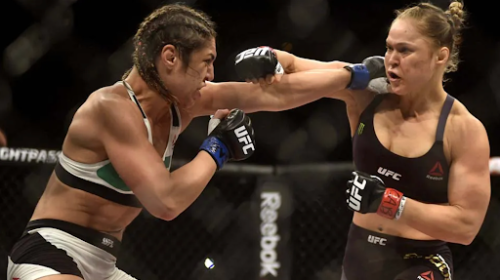
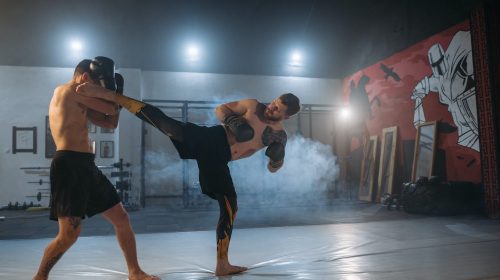
Boxing provides the foundation for hand combinations, head movement, footwork, and distance management. Muay Thai adds elbows, knees, and the clinch — the art of controlling and damaging an opponent at close range. Kickboxing bridges the two, incorporating powerful leg kicks that can accumulate damage across five rounds and fundamentally limit an opponent’s mobility.
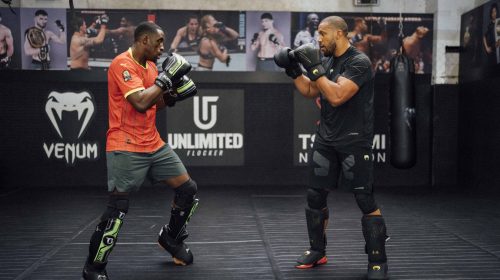
The primary training tool for striking development is pad work. Working with a coach or training partner holding focus mitts or Thai pads develops speed, precision, power, and timing in a controlled environment. Pad work with a coach or training partner holding pads develops speed, precision, and conditioning. Shadow boxing — striking without a partner, focusing on technique and movement — is equally important, as it allows a fighter to rehearse combinations and transitions without the constraints of a partner’s reactions.
Heavy bag work develops power and endurance. Sparring — controlled fighting with a training partner — is where all of these elements are tested and refined under genuine pressure. Most elite gyms structure sparring carefully: most good MMA fighters, coaches and gyms combine everything all together (i.e. full MMA sparring) only a couple of times a week, and most of the time separate the sparring into the different component areas.
2. Wrestling: The Art of Controlling Where the Fight Happens
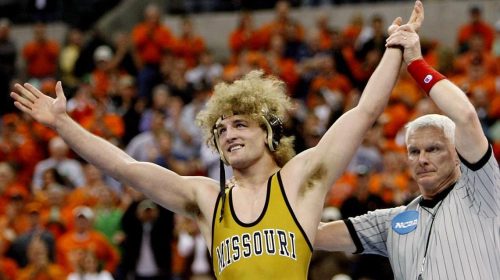
Wrestling is arguably the single most important base for MMA success. The ability to take an opponent down, to prevent being taken down, and to control position on the ground determines the entire structure of a fight. A fighter who can dictate whether the bout stays standing or goes to the ground holds a fundamental strategic advantage.
Professional fighters train both freestyle and Greco-Roman wrestling, alongside judo, which contributes hip throws and trip-based takedowns. The clinch — the contested space where fighters are chest-to-chest — is a battleground in itself. Contemporary fighters deal with the clinch by starting with a Muay Thai plum, moving into a wrestling underhook, and finishing with a judo throw. This crossover style renders them extremely challenging to train for.
Takedown drilling, sprawl training (defending against takedowns), and positional sparring on the mat form the core of wrestling development. Grip strength is a critical component: many of a fighter’s grappling and clinching scenarios involve gripping, squeezing, and holding their opponent in order to maintain or improve position, work through a takedown, or finish a submission.
Elite gyms such as the American Kickboxing Academy (AKA), which produced Khabib Nurmagomedov and Daniel Cormier, have built entire systems around wrestling dominance. AKA is particularly known for producing dominant wrestlers and powerful strikers, with its emphasis on wrestling and cardio endurance making its fighters known for their relentless pressure and elite grappling skills.
3. Brazilian Jiu-Jitsu: The Ground Game
If wrestling determines where the fight goes, Brazilian Jiu-Jitsu (BJJ) determines what happens once it gets there. BJJ is the art of ground control, positional dominance, and submission grappling — the system of chokes, joint locks, and positional transitions that can end a fight without a single strike being thrown.
Professional fighters train BJJ both as a standalone discipline and as part of integrated MMA ground work. The distinction matters: BJJ in a gi (the traditional uniform) teaches grip-based techniques and patience, whilst no-gi BJJ — closer to the conditions of an actual MMA fight — develops faster, more explosive transitions. Most professional fighters train primarily no-gi, though many cross-train in gi work for the technical depth it provides.
Drilling — repeating specific techniques hundreds or thousands of times — is the backbone of BJJ development. Drills are the bridge between learning a technique and applying it in real time. Repetition through drills locks technique into muscle memory, making it second nature when the intensity of sparring or competition kicks in.
Live rolling (sparring on the ground) translates drilled techniques into applicable skills. The best BJJ practitioners in MMA — fighters like Demian Maia and Charles Oliveira — have demonstrated that elite ground skills can be the decisive factor even at the highest levels of the sport.
4. Strength and Conditioning: Building the Engine
Technical skill means very little if a fighter cannot execute it in the third, fourth, and fifth rounds. Strength and conditioning is the physical infrastructure that allows technique to show up when it counts most.
Modern MMA conditioning is a sophisticated blend of strength training, power development, and energy system work. Research shows time and again that strength, power, and anaerobic capacity are what separates higher-level combat sport athletes from the rest of the pack.
Professional fighters train compound movements — squats, deadlifts, overhead presses, and pull-ups — that develop functional strength across multiple muscle groups simultaneously. The approach differs fundamentally from bodybuilding: fighters keep weights low and intensity high to build agility, speed, and endurance, avoiding training like bodybuilders or powerlifters which focuses mainly on size instead of performance.
Conditioning work targets two distinct energy systems. Aerobic capacity — the ability to sustain output over multiple rounds — is built through steady-state work: running, rowing, cycling. Anaerobic capacity — the ability to produce explosive bursts of power — is developed through high-intensity interval training (HIIT), sprints, and circuit work that mimics the demands of a real fight.
A study on experienced MMA fighters found that three times weekly, short, intense workouts mimicking mat work significantly improved maximal lifts, jump power, sprint speed, and aerobic capacity over one month — demonstrating that sport-specific training is key.
5. The Fight Camp: Structured Preparation
Elite fighters do not simply train continuously at maximum intensity year-round. The professional system is built around fight camps — concentrated periods of preparation for a specific opponent.
Fight camps typically last around 8 to 10 weeks, with intense and repetitive drills designed to prepare professional MMA fighters for their upcoming bouts. During this period, training intensifies across all disciplines, sparring increases, and game planning — the tactical preparation specific to the upcoming opponent — becomes central.
Fighters and coaches analyse opponents extensively, studying tendencies, strengths, and weaknesses. Game plans are crafted to exploit openings whilst minimising risk. A fighter with dominant wrestling might be approached with a game plan that keeps the fight standing; a striker with limited ground skills might be targeted for takedowns from the opening bell.
Outside of fight camp, training shifts toward skill development, physical improvement, and recovery. This periodisation — the deliberate variation of training intensity and focus over time — is essential for longevity in a sport that places enormous demands on the body.
6. Mental Conditioning: The Invisible Training
The physical and technical preparation that goes into a professional MMA bout is visible. The mental preparation that determines whether those skills are accessible under pressure is not.
As the technical gap between fighters continues to shrink, the “mental edge” has become the ultimate variable in professional MMA. A fighter can have world-class Brazilian Jiu-Jitsu and Olympic-level wrestling, but without the mental resilience to apply those skills under the crushing weight of a title fight, that talent is wasted.
Professional fighters work with sports psychologists, meditation teachers, and performance coaches to develop the mental skills that allow them to perform under extreme pressure. Visualisation — mentally rehearsing a fight before it happens — is standard practice at elite level. A hallmark of high-level psychological training is the use of cognitive reframing and vivid mental imagery. Fighters are taught to view pre-fight nerves not as anxiety, but as readiness or excitement, effectively changing the body’s chemical response to the stimulus.
Breathing regulation — controlling the body’s stress response through deliberate breath work — is another widely used tool. Managing adrenaline, staying composed after absorbing a hard shot, and making clear tactical decisions whilst physically exhausted are all skills that can be trained, and professional fighters train them deliberately.
7. Recovery: The Training You Do Between Training
Elite MMA training is extraordinarily taxing. Without intelligent recovery, the body cannot adapt, skills cannot consolidate, and injury risk escalates dramatically. Recovery is not the absence of training — it is a discipline in itself.
Professional fighters use a range of recovery modalities: sleep (the most powerful recovery tool available), nutrition timed around training sessions, active recovery work such as light swimming or yoga, and bodywork including massage and physiotherapy. Mobility and flexibility training — often underestimated — keeps joints healthy and maintains the range of motion needed for kicks, sprawls, and submissions.
Consistency is critical, as even short breaks can lead to performance decline at the elite level. The best professional fighters are not necessarily those who train hardest in individual sessions — they are those who train consistently and intelligently over years and decades, managing their body well enough to remain available for training day after day.
Conclusion
What separates professional MMA training from amateur practice is not access to secret techniques — it is the integration, consistency, and intelligence with which the fundamentals are applied. Training is not about mastering one art, but learning how to blend them seamlessly under pressure.
The top MMA training techniques — striking combinations, wrestling control, BJJ ground work, structured strength and conditioning, mental preparation, and disciplined recovery — are not individually mysterious. They are, however, extraordinarily demanding to combine and sustain at the level required for professional competition.
For those who aspire to train like a professional fighter, the starting point is not the most advanced technique but the most fundamental one: showing up consistently, working on weaknesses as well as strengths, and trusting that the compound effect of intelligent, sustained training will produce results that individual sessions cannot.