










MMA Physical Therapy for Injury Recovery and Performance
MMA physical therapy helps fighters recover from injuries. It improves movement. It helps them return to training with a lower risk of reinjury. It combines a full evaluation, hands-on care, strength training, and sport-specific exercises to match each athlete’s needs.
A physical therapist creates a plan based on your injury, training goals, and recovery stage. They do not use a standard program. With the right approach, MMA physical therapy can improve performance, support long-term health, and help athletes get back to the sport safely.
Key Takeaways
- MMA physical therapy helps fighters recover from injuries, rebuild strength, and return to training with less risk of reinjury.
- A physical therapist uses movement tests, strength checks, and sport-specific drills to develop a care plan tailored to the athlete.
- Treatment may include exercise, mobility work, manual therapy, and gradual increases in training load.
- A sports rehab specialist can guide a safe return to practice by tracking pain, control, balance, and strength.
- Injury prevention depends on proper warm-ups, smart training, enough rest, and steady progress.
Conditions Commonly Treated
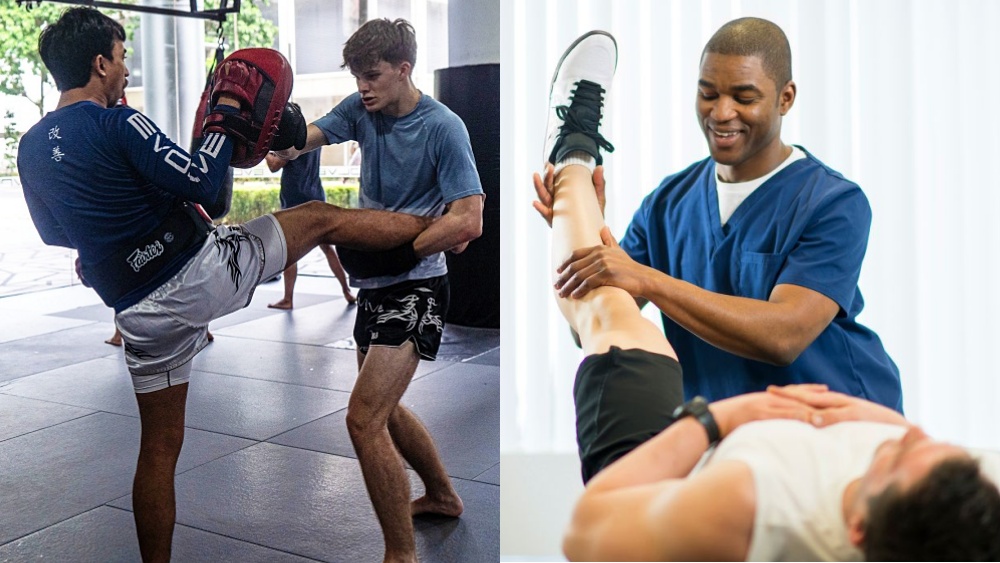
Combat sports put stress on many parts of the body. MMA and sports rehab can help after a sudden injury or pain that builds over time. It is useful for people who train in boxing, wrestling, Brazilian jiu-jitsu, kickboxing, and other combat sports.
Common conditions include:
- Shoulder injuries
- Knee injuries
- Neck pain
- Lower back pain
- Ankle sprains
- Tendon pain
- Weakness after surgery
A physical therapist checks how the injury affects your movement in daily life and during training. The exam assesses strength, flexibility, balance, joint mobility, and body control. These results help build a plan that fits your goals.
What Happens During an Evaluation
Your first visit starts with questions about your pain, health history, training, and goals. The therapist may watch you squat, rotate, step, punch, or perform other simple movements. This helps find the real cause of the problem instead of treating only the pain.
Your evaluation may include:
- Joint movement tests
- Strength testing
- Balance checks
- Movement screening
- Sport-specific movement tests
Treatment plans should match your injury, activity level, and stage of recovery. Care may include stretching, strength exercises, movement training, and manual therapy when needed. People looking for trusted rehabilitation services may also learn about in touch pt while comparing local care options.
How Sports Medicine Supports MMA Injury Recovery
Sports medicine helps MMA athletes recover by combining injury care with safe performance goals. It looks at how pain, weakness, poor movement, and training load affect the whole body.
This approach helps the therapist treat the injury while preparing the athlete for the demands of striking, grappling, and conditioning.
A sports medicine plan may include strength work, mobility drills, balance training, and sport-specific movement tests. The therapist may also track pain, range of motion, speed, and control during each stage of rehab.
These checks help show when an athlete is ready to move from basic exercise to harder training.
Sports medicine also supports injury prevention. It can help athletes improve warm-ups, manage training volume, and fix weak movement patterns. This reduces stress on injured areas and may lower the risk of the same problem returning.
Returning to Training Safely
Feeling better does not always mean you are ready to train at full speed. Sports physical therapy helps you build strength and control step by step before you return to hard practice. Each stage prepares your body for more movement and more force.
Your return to sport may include:
- Light cardio
- Basic strength exercises
- Solo skill drills
- Partner drills
- Full practice
- Competition training
Each step shows how your body responds to more work. Your therapist checks your progress and changes the plan if needed. This process helps lower the chance of getting hurt again.
Building Long-Term Resilience
Good rehab does more than reduce pain. It also improves movement, strength, flexibility, and body control. Injury prevention includes smart training, proper warm-ups, enough rest, and slow increases in workout intensity.
Many athletes search for sports rehab specialists or sports medicine when choosing a clinic that understands combat sports. A good provider knows how to treat injuries and prepare athletes to return with confidence.
Regular checkups help measure progress and keep recovery moving in the right direction.