


















Could the UFC White House Event Go On as Planned During the Iran Conflict? Is It Safe?
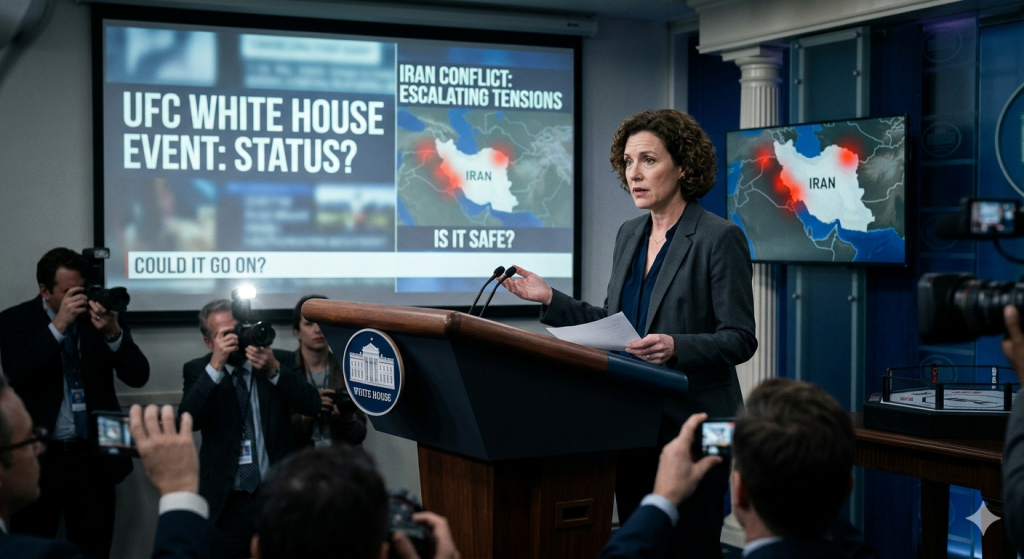
The plan to stage a historic UFC fight card on the South Lawn of the White House in June 2026 has generated enormous buzz among fight fans. But with the United States currently engaged in a military conflict with Iran, the question is increasingly being asked: could the event realistically go forward—and would it be safe if it does?
A Historic Event With Huge Symbolism
The event—often referred to as “UFC Freedom 250”—is scheduled for June 14, 2026, coinciding with Flag Day and President Donald Trump’s 80th birthday. The card is expected to feature around six fights, including a lightweight title bout between Ilia Topuria and Justin Gaethje. Attendance on the South Lawn will be limited to roughly 5,000 invited guests, with larger viewing areas nearby for thousands more fans.
If it proceeds as planned, it would be the first professional sporting event ever held at the White House—a spectacle meant to celebrate the 250th anniversary of the United States.
The Complication: A War With Iran
The geopolitical situation has dramatically changed since the event was first proposed. In late February 2026, the U.S. and Israel launched strikes against Iran, sparking an escalating conflict that has included missile and drone attacks across the region.
That reality has raised concerns among analysts, fans, and even people connected to the UFC broadcast team. During a recent podcast discussion, commentator Joe Rogan described the idea of staging a major fight event at the White House during wartime as “very high security and weird”, noting the risk of concentrating thousands of high-profile people in one place.
Public concern is also growing. One recent poll found 77% of Americans believe a terrorist attack in the U.S. is at least somewhat likely because of the Iran war, highlighting the broader anxiety surrounding high-profile public gatherings.
Security Would Be Unprecedented
If the UFC event goes forward, it would likely be treated as something close to a National Special Security Event, the designation used for events like presidential inaugurations or major global summits. Under such protocols, the U.S. Secret Service leads security, with the FBI handling counter-terrorism intelligence and investigations.

The White House itself is already among the most heavily protected locations on Earth, featuring layered defenses that include:
- restricted airspace and anti-drone systems
- multiple federal law-enforcement agencies
- military surveillance and air defense coordination
- extensive screening and controlled access for guests
However, the unique nature of a large outdoor sporting event at the presidential residence would likely require extra security perimeters, airspace restrictions, and surveillance measures.
Are There Credible Threats?
So far, U.S. officials have not identified specific threats tied to the UFC event. Authorities recently investigated intelligence suggesting a possible Iranian drone threat in the U.S., but officials later said the information was unverified and not tied to a confirmed plot.
Still, experts warn that high-profile symbolic events during wartime naturally increase perceived risk, even if no credible threat currently exists.
Could the Event Be Postponed or Cancelled?
At the moment, the UFC and White House have not announced any plans to postpone the event. Planning continues, and the fight card has already been revealed.
However, several factors could still affect whether it happens:
- escalation of the U.S.–Iran conflict
- credible intelligence of a security threat
- logistical or regulatory concerns
- political considerations surrounding wartime optics
The Bottom Line
Technically, the event could still go on safely if security agencies determine the risk is manageable. Th.e White House is arguably one of the most secure venues in the world.
But politically and symbolically, staging a massive sporting event there during an active international conflict is unusual—and controversial.
For now, the UFC White House card remains on the calendar, but as the conflict with Iran evolves, the ultimate decision may come down to security assessments in the months leading up